TPUSA: Lobbying, Tax Exemptions, and Hypocritical Donor Sources
Turning Point USA, Donor Networks, and Statutory Compliance
The contemporary American political landscape is increasingly defined by highly integrated influence operations that seamlessly merge opaque financial architecture, strategic regulatory capture, and the instrumentalization of political theology. Organizations such as Turning Point USA (TPUSA) and its affiliated entities—including the 501(c)(4) Turning Point Action and the religious outreach arm TPUSA Faith—publicly project an image of decentralized, grassroots mobilization. However, an exhaustive, fact-driven audit of campaign finance disclosures, tax-exempt regulatory frameworks, and foreign lobbying statutes reveals a highly centralized, top-down apparatus designed to extract capital, enforce ideological compliance, and secure favorable regulatory environments for out-of-state corporate interests.
FINANCES
Despite saturating the information space with crowded events and millions of followers, TPUSA and Federalist Society are spending more than they are receiving in donations despite record funding. As MAGA and Trump become less popular, funding continues to “double down.” Both TPUSA and Federalist Society are funded by a small group of megadonors.
TPUSA tax filings show the following balances and deficiencies:
Year Revenue Context
2012 $79,000 Founded by 18-year-old Charlie Kirk
2013 ~$75,000 Near-shuttered multiple times
2015 $2,000,000 “Presence on 1,000 campuses” (unverified)
2016 $8,288,866 Trump elected, polarization rises
2020 ~$40M Peak Trump/MAGA moment
2023 $84,988,862 Trump DECLINING, yet revenue DOUBLED
2024 $85,000,000+ Trump approval 37%, yet revenue still rising
LARGEST DIRECT DONORS (identified from foundation tax records):
- Wayne Duddlesten Foundation (TX): $13,100,000
- Jack Roth Foundation: $8,700,000
- Bernie Marcus Foundation (Home Depot): $7,100,000
- Charles B. Johnson Foundation: $4,600,000
- William Dunn (Dunn Capital): $4,500,000
- Dean Buntrock (Waste Management): $4,100,000
ADDITIONAL BILLIONAIRE-LINKED FOUNDATIONS:
- Isaac Perlmutter (ex-Marvel)
- Darwin Deason (tech entrepreneur)
- Richard Uihlein (Uline packaging) — FedSoc mega-donor too
- John Catsimatidis (Gristedes supermarkets)
- A. Jerrold Perenchio (ex-Univision)
- Jimmy John Liautaud (sandwich chain)
- Foster Friess (investment manager, first donor $10K, widow pledged $1M post-Kirk death)
- Gary Rabine (Rabine Group, serial entrepreneur)
- Bruce Rauner Family Foundation (IL governor, VC)
- Ed Uihlein Family Foundation ($275K in 2014)
TOTAL IDENTIFIED: At least $45M+ from ~15-20 mega-donors.
- Professional fundraising fees: $2,610,865 on $84.3M contributions
- Fundraising cost: 3.1% of contributions
- INDUSTRY STANDARD for grassroots small-dollar: 20-40%
- INDUSTRY STANDARD for major donor organizations: 5-10%
- TPUSA at 3.1% = CHARACTERISTIC OF ULTRA-HIGH-NET-WORTH DONOR BASE
PEW RESEARCH (Jan 2026) — TRUMP/MAGA DECLINE:
- Trump approval: 37% (down from 40% in fall 2025)
- Support all or most Trump policies: 27% (down from 35%)
- Republican support: 67% → 56% (-11 points)
- 50% say administration WORSE than expected vs 21% better
- Confidence in Trump’s ethics: 42% of Republicans (down from 55%)
FEDERALIST SOCIETY — SAME MODEL, WORSE FINANCES
In 2022, the Federalist Society received $21,483,325 yet reported a -$4,718,968 (22%) deficit. Like TPUSA, Federalist Society relies on a small group of large donors, including:
- Bradley Foundation (Wisconsin): Major documented donor
- Richard & Elizabeth Uihlein Foundation: Confirmed mega-donor
- DonorsTrust / Donors Capital Fund: Dark money intermediaries
- Thomas W. Smith Foundation
- Real Clear Foundation (funded by Uihlein + Bradley)
The Macro-Economics of Influence: Astroturf Capital and Intermediary Vehicles
The financial engine driving TPUSA has fundamentally transitioned from localized, small-dollar grassroots support to a highly centralized astroturf operation sustained by a concentrated constellation of ultra-wealthy benefactors. Since its inception in 2012, TPUSA’s reported revenues have escalated exponentially, growing from $4.3 million in 2016 to exceeding $85 million by the 2024 fiscal year, while maintaining tens of millions in total assets. This massive accumulation of capital relies heavily on specialized philanthropic vehicles designed to shield contributor identities and legally sever the public link between the original source of wealth and the recipient organization.
Core Donor Vehicles and the Function of Dark Money
An analysis of primary donor sources reveals a reliance on massive influxes of capital from established conservative mega-donors whose wealth was generated decades prior in legacy American industries, such as manufacturing, retail, and fossil fuels. The utilization of Donor-Advised Funds (DAFs)—particularly Donors Trust, colloquially known within philanthropic circles as the “dark-money ATM”—acts as a critical financial firewall for this network. This opaque apparatus ensures that the strategic, often corporate-aligned priorities of a small elite are executed under the guise of an organic youth uprising, insulating the donors from consumer boycotts or public accountability.
| Donor / Foundation | Source of Wealth (Industry) | Estimated Contribution | Funding Mechanism |
|---|---|---|---|
| Bradley Impact Fund | Manufacturing (Allen-Bradley) | $23.6M+ (2014-2023) | Donor-Advised Fund |
| Marcus Foundation | Retail (Home Depot) | $7.1M+ ($2.5M in 2023) | Direct Foundation Grant |
| Dunn Foundation | Investment Management | $3.3M+ ($1M in 2023) | Direct Foundation Grant |
| Deason Foundation | Technology (Affiliated Comp. Svcs.) | $1.8M+ (2016-2023) | Direct Foundation Grant |
| Ed Uihlein Family Foundation | Logistics/Supplies (Uline) | $1.55M+ (2014-2021) | Direct Foundation Grant |
| Donors Trust | N/A (Intermediary) | $4M+ (2020-2023) | Donor-Advised Fund |
Data source: Compiled from foundation public disclosures and IRS Form 990s.
This financial architecture creates a fundamental disconnect between the populist, anti-elite rhetoric deployed by TPUSA activists and the established, old-money provenance of the capital sustaining their operations.
The Klingenstein Portfolio: Ideological Hypocrisy and Doctrinal Contradictions
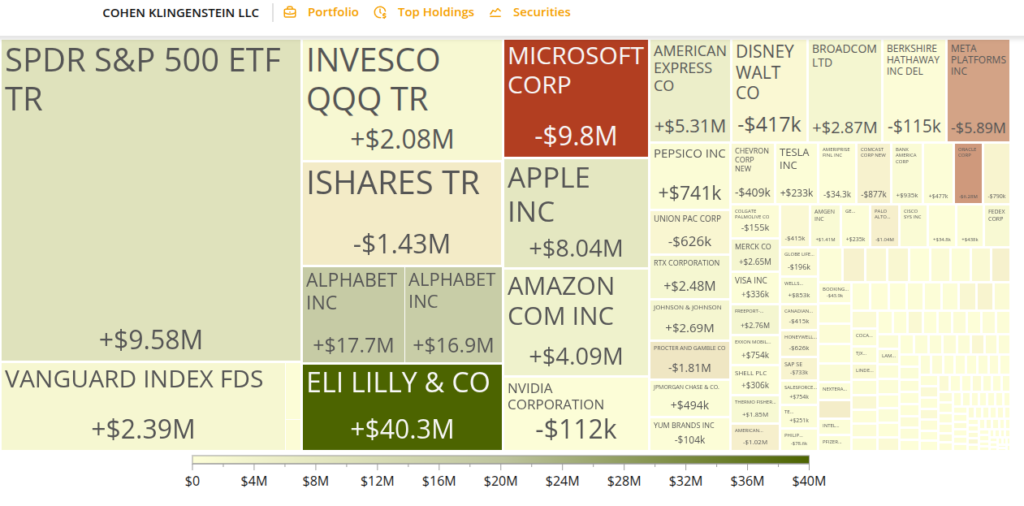
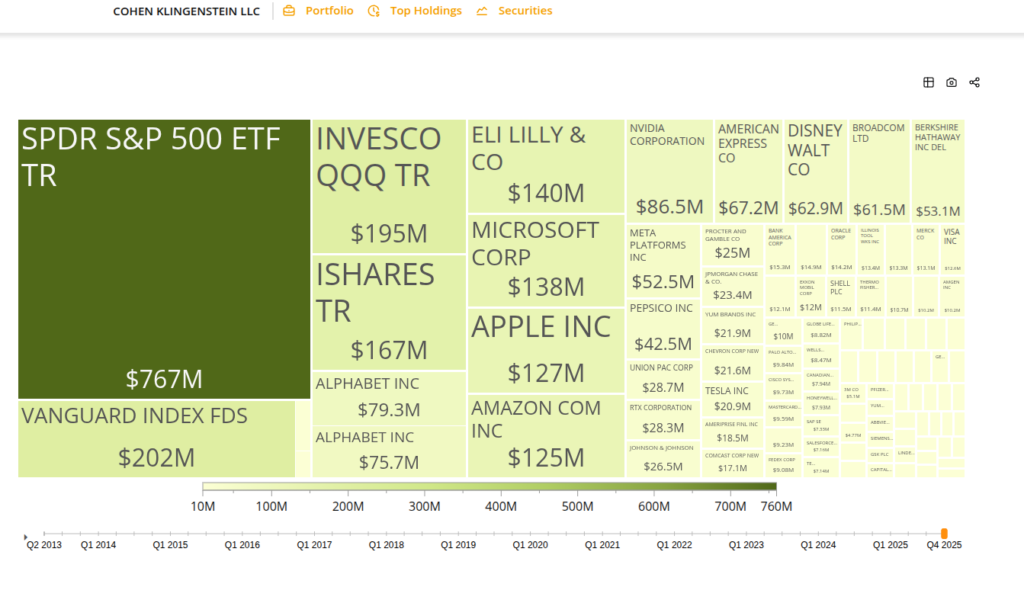
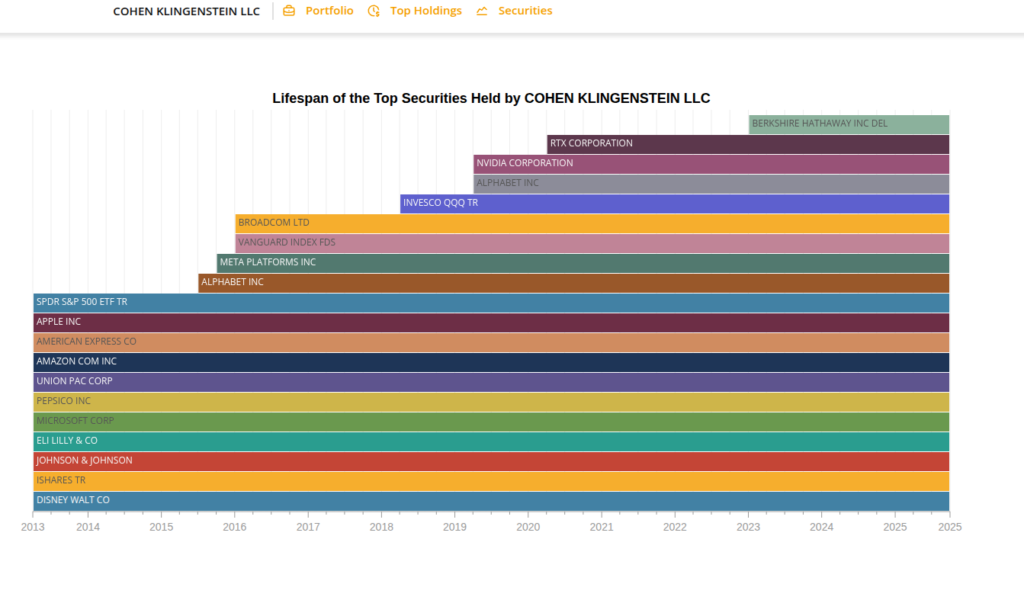
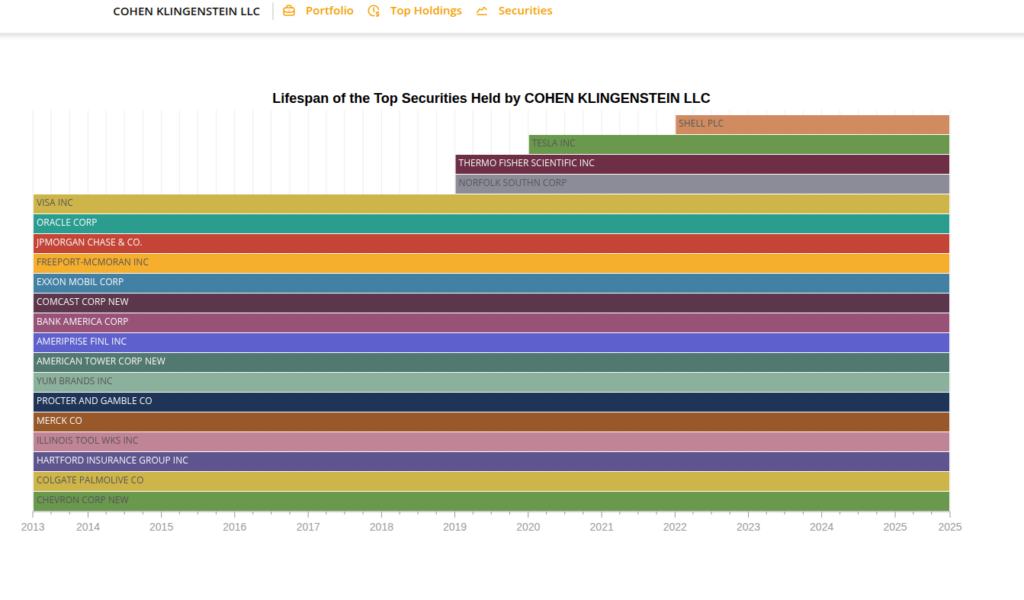
A core vulnerability in TPUSA’s operational facade emerges when evaluating the ideological consistency of its primary financiers. Thomas D. Klingenstein, a prominent mega-donor to TPUSA and Chairman of the Claremont Institute, serves as a primary intellectual and financial architect of the modern conservative movement. Klingenstein explicitly frames contemporary American politics as a “cold civil war” against a “Woke regime” and advocates for the preservation of a traditional “Judeo-Christian ethos”. He co-manages Cohen Klingenstein LLC, an investment firm overseeing approximately $3.19 billion in discretionary assets. However, a forensic analysis of the firm’s investment portfolio reveals substantial holdings in corporations whose core business practices directly contravene the theological doctrines TPUSA Faith promotes to its followers.
Big Pharma, Fetal Cell Lines, and the Abortion Paradox
TPUSA and its affiliated religious networks maintain a strict, uncompromising public stance against abortion, utilizing the issue as a primary mechanism for mobilizing conservative voters. Yet, the financial portfolio sustaining this activism reveals a profound structural paradox. Cohen Klingenstein LLC maintains heavy investments in massive pharmaceutical conglomerates, including Johnson & Johnson, Eli Lilly, Merck & Co., and Pfizer. The development, testing, and production of modern vaccines and pharmaceuticals by these corporations frequently involve the use of historical fetal cell lines, such as WI-38, MRC-5, and HEK-293, derived from aborted fetuses.
This reality poses a direct question of objective compliance and bad faith: if TPUSA genuinely operates on the uncompromising religious principle that abortion is an absolute moral evil, why does the organization accept millions in funding from an investor who actively enriches himself by directing capital into pharmaceutical companies that utilize fetal stem cell and clone testing?. Furthermore, within traditional Christian theology, including Catholic canon law, there are established mechanisms of repentance for individuals who have had abortions, indicating that the act is not an unforgivable sin. The hyper-fixation on abortion as an unforgivable political line in the sand—while simultaneously profiting from the scientific byproducts of the procedure—suggests that the religious doctrine is not sincerely held, but rather weaponized as an instrumental tool for political mobilization and fundraising.
Usury, Corporate “Wokeness,” and the Taxation Paradox
The contradictions extend beyond the pharmaceutical sector. The portfolio of Cohen Klingenstein LLC is heavily weighted in the financial sector, including massive stakes in JPMorgan Chase, Bank of America, and American Express. Historical Christian doctrine stringently condemned “usury,” defined as the charging of interest on loans. The entire business model of modern finance is predicated on profiting from debt, creating severe tension with the traditionalist theology espoused by the network. Furthermore, the portfolio holds significant positions in corporations such as The Walt Disney Company, PepsiCo, and Shell Oil—companies that are prominent corporate supporters of LGBTQ+ rights, inclusive healthcare, and ESG initiatives, placing the financial engine of TPUSA in direct alignment with the very “woke” corporate culture it exists to combat.
| Doctrinal Conflict | Relevant Holdings in Cohen Klingenstein LLC | Analysis of Conflict |
|---|---|---|
| Sanctity of Life (Fetal Cell Line Usage) | Johnson & Johnson, Eli Lilly, Merck & Co., Pfizer | Investment in companies utilizing historical fetal cell lines (WI-38, MRC-5, HEK-293) for pharmaceutical testing directly contradicts TPUSA Faith’s strict pro-life platform. |
| Prohibition of Usury | JPMorgan Chase, Bank of America, American Express | The business model of modern banking relies on profiting from debt and interest, conflicting with traditional Christian doctrines against usury. |
| Support for “Woke” Corporate Initiatives | The Walt Disney Company, PepsiCo, Shell Oil, Wells Fargo | Financial investments in prominent corporate supporters of ESG and LGBTQ+ initiatives align the donor’s wealth with the cultural forces TPUSA actively campaigns against. |
Data source: Cohen Klingenstein LLC 13F Filings.
A broader theological paradox undermines the network’s aggressive pursuit of tax-exempt status. Foundational Christian texts and canonical traditions explicitly mandate the payment of secular taxes, famously encapsulated in the biblical directive to “render unto Caesar the things that are Caesar’s”. Therefore, if orthodox Christians are doctrinally instructed to fulfill their tax obligations to the state, the aggressive pursuit of 501(c)(3) tax exemptions by a highly capitalized, politically active organization presents a structural contradiction. The invocation of religious liberty to secure a tax exemption, while simultaneously ignoring the doctrinal mandate to pay taxes, further indicates that the organization is utilizing the guise of religion specifically to evade financial liabilities and registration requirements.
The First Amendment Shield, Religious Fraud, and the Sincerity Test
The glaring contradiction between the financial underpinnings of TPUSA’s donors and the organization’s public-facing Christian values raises a critical legal question: does claiming a specific religion while making no good faith effort to follow its tenets constitute actionable fraud? Specifically, can an organization be prosecuted or stripped of its tax-exempt status for using a religious lie to evade taxes and registration requirements?
United States v. Ballard and the Boundaries of Fraud
The jurisprudence surrounding religious fraud is heavily dictated by the landmark Supreme Court decision United States v. Ballard, 322 U.S. 78 (1944). In the Ballard case, the defendants, leaders of the “I Am” movement, were charged with mail fraud for collecting millions of dollars in donations based on supernatural religious claims—such as the ability to heal the sick and converse with divine entities—that they allegedly knew were entirely false.
The Supreme Court ruled that the First Amendment precludes secular courts from inquiring into the truth or falsity of a religious belief. Writing for the majority, Justice William O. Douglas asserted that men may believe what they cannot prove, and heresy trials are foreign to the United States Constitution. Therefore, the state may not evaluate the validity of a dogma. However, the courts established a crucial caveat: while the state cannot judge the truth of a religion, it can judge whether a belief is sincerely held. The “sincerity test” became the legal standard for sorting genuine religious exercise from criminal enterprise; an individual or organization cannot subvert the law or commit fraud through the mere guise of an insincere religious belief.
Despite this standard, successfully prosecuting religious fraud or revoking tax-exempt status based on the sincerity test is notoriously difficult. As Chief Justice Stone and Justice Jackson noted in their Ballard dissents, separating the sincerity of a belief from its underlying truth is practically impossible, and aggressive prosecutions risk crossing into religious persecution. Consequently, secular courts and the IRS observe the “ecclesiastical abstention doctrine,” which severely limits government intervention in religious controversies or internal church governance.
The Limits of the Sincerity Test in IRS Enforcement
Applying the sincerity test to an organization’s tax-exempt status based on the hypocritical stock portfolios of its mega-donors is legally untenable. The IRS evaluates 501(c)(3) eligibility based on an organization’s operational activities and purpose, not the financial origins or moral consistency of its capital. The IRS acknowledges that while the First Amendment mandates “benevolent neutrality” towards religion, the agency has a duty to inquire when an organization uses religion as a shield to hide illegal activities or non-exempt purposes. However, the IRS rarely cites “insincerity” when denying tax exemptions because it is highly subjective. Instead, the IRS focuses on tangible statutory requirements: whether the organization is operated exclusively for exempt purposes, avoids private inurement, and refrains from political campaign intervention. Therefore, while TPUSA’s acceptance of capital derived from fetal cell testing and usury constitutes profound ideological hypocrisy, it does not meet the legal definition of tax fraud. The true regulatory vulnerability lies in how this religious facade is utilized to bypass statutory reporting requirements and engage in exclusively partisan advocacy.
IRS 501(c)(3) Compliance, The Johnson Amendment, and Partisan Exclusivity
The most substantial and objective threat to the tax-exempt status of TPUSA, TPUSA Faith, and allied organizations such as the Federalist Society is the strict statutory prohibition against political campaign intervention.
The Johnson Amendment
Enacted in 1954 and named after then-Senator Lyndon B. Johnson, the Johnson Amendment is a provision in the U.S. tax code that absolutely prohibits all 501(c)(3) non-profit organizations from directly or indirectly participating in, or intervening in, any political campaign on behalf of (or in opposition to) any candidate for elective public office. This includes making financial contributions, publishing statements of endorsement, or coordinating activities with political campaigns. The legislative intent of the amendment was to ensure that tax-exempt charities, educational institutions, and churches are not utilized as illicit conduits for tax-deductible political contributions, thereby protecting the integrity of the campaign finance system.
While 501(c)(3) organizations are permitted to engage in civic engagement activities, such as voter registration and educational forums, federal tax law mandates that these efforts must be conducted in a strictly nonpartisan manner. Any targeting of voter registration efforts based on political affiliation, or any coordination with candidates or political parties, constitutes a violation of the Johnson Amendment and grounds for the revocation of tax-exempt status.
Partisan Exclusivity and Enforcement Paralysis
A critical question regarding regulatory compliance is why the IRS permits organizations like TPUSA and the Federalist Society to retain their 501(c)(3) status when they engage in highly partisan political advocacy and universally refuse to endorse or support Democratic or liberal candidates.
The persistence of their tax-exempt status is largely due to sophisticated legal buffering and the systemic enforcement paralysis of the IRS. These organizations employ a dual-entity corporate structure. TPUSA maintains its 501(c)(3) status for tax-deductible fundraising and “educational” campus operations, while establishing a sister 501(c)(4) organization, Turning Point Action (TPAction), to handle explicit political advocacy. Under IRS rules, 501(c)(4) “social welfare” organizations are permitted to engage in partisan political campaigns, provided it is not their primary activity. By strictly compartmentalizing their explicit endorsements within the 501(c)(4) entity, the network maintains a veneer of legal compliance.
Furthermore, the IRS faces immense political pressure and legal intimidation when attempting to enforce the Johnson Amendment against conservative organizations. Following controversies surrounding the IRS targeting of Tea Party groups for extra scrutiny in the early 2010s, the agency has exhibited profound reluctance to aggressively audit high-profile conservative nonprofits. This reluctance was compounded in 2017 when President Donald Trump signed an executive order directing the Treasury Department to deprioritize enforcement of the Johnson Amendment against religious organizations, creating a de facto safe harbor for churches and faith-based nonprofits to engage in partisan electioneering without fear of audit. Consequently, organizations like the Federalist Society operate freely, utilizing “educational” seminars and judicial networking that meticulously advance a singular, partisan conservative agenda while technically stopping just short of explicit electoral endorsement within their 501(c)(3) frameworks.
Coordination Vulnerabilities: “Chase the Vote”
Despite the legal buffering of the 501(c)(4) structure, the network frequently pushes the boundaries of permissible coordination. Leading up to the 2024 elections, TPAction launched “Chase the Vote,” a massive $100 million voter outreach initiative. The explicit goal of this initiative was to harvest early and mail-in ballots by targeting Republican-leaning “low propensity” voters in key swing states. TPAction leadership, including Charlie Kirk, publicly confirmed that the organization was working “in direct coordination” with the Trump campaign on this initiative.
While the Federal Election Commission (FEC) issued advisory opinions suggesting that certain canvassing scripts do not constitute a “public communication” triggering campaign finance penalties, the IRS regulations governing the associated 501(c)(3) entity remain absolute. If the resources, branding, data infrastructure, donor lists, or personnel of the tax-exempt 501(c)(3) TPUSA entity are utilized to subsidize or support the highly partisan, campaign-coordinated “Chase the Vote” operation, it would constitute an egregious violation of the Johnson Amendment.
5.4 The Politicization of the Pulpit: The New Song Church Case Study
The network’s strategy of utilizing religious institutions as political staging grounds frequently crosses the threshold of prohibited political intervention. According to an official Form 13909 (Tax-Exempt Organization Complaint) submitted to the IRS, New Song Church in Bismarck, North Dakota, has been directly implicated in such violations.
The complaint details that on April 27, 2024, the church hosted a TPUSA Faith “Leadership Conference” that functioned operationally as a partisan campaign rally. The event featured eleven Republican candidates and elected officials, including the Chair of the North Dakota GOP, and was explicitly sponsored by the political campaigns of U.S. House candidates Rick Becker and Alex Balazs. Furthermore, the complaint alleges that Naomi Bromke, identified as the President of TPUSA Faith at the University of North Dakota and the daughter of the church’s pastor, Kurt Chaffee, utilized church resources to coordinate this national political operation.
Internal communications revealed that organizers instructed attendees that the goal of the event was to “fight evil” that had arrived in North Dakota, weaponizing theology to mobilize voters for specific Republican candidates. Hosting events explicitly sponsored by political campaigns and utilizing a tax-exempt church facility to advance the private interests of family members and partisan candidates constitutes clear grounds for an IRS investigation into both political campaign intervention and private inurement.
Exploitation of Section 7611 Church Status and Regulatory Arbitrage
To circumvent the remaining transparency requirements imposed on standard 501(c)(3) non-profits, affiliated operatives engage in sophisticated “theological arbitrage,” exploiting specific exemptions within the Internal Revenue Code designed for traditional houses of worship.
Under U.S. tax code, standard 501(c)(3) organizations are required to file an annual Form 990, a public document that discloses gross revenues, executive compensation, large expenditures, and board member conflicts of interest. However, entities that secure legal classification as a “church, convention, or association of churches” under IRC Section 170(b)(1)(A)(i) are completely exempt from filing Form 990.
Sean Feucht
This regulatory loophole has been aggressively exploited by political operatives within the network. Sean Feucht, a former worship leader turned political activist deeply integrated with TPUSA, built Sean Feucht Ministries Inc. into a massive fundraising juggernaut during the COVID-19 pandemic by organizing partisan “Let Us Worship” protests that defied public health mandates. Public tax filings reveal that the organization’s revenue skyrocketed from $284,000 in 2019 to over $5.3 million in 2020.
As capital accumulated, Feucht engaged in aggressive real estate acquisitions, purchasing multiple luxury properties across the country. Many of these properties were legally registered by the ministry as “parsonages,” thereby exempting them from local property taxes, while Feucht simultaneously maintained personal ownership of numerous rental properties. Faced with mounting journalistic scrutiny over potential private inurement—the illegal diversion of non-profit funds for the personal benefit of insiders—Feucht executed a strategic regulatory maneuver. In 2021, Sean Feucht Ministries successfully petitioned the IRS to reclassify the organization from a standard 501(c)(3) non-profit to a “church”. By adopting the legal definition of a church, the itinerant political activism enterprise permanently shielded its finances, executive compensation, and real estate holdings from public and regulatory oversight, utilizing the sanctity of the church purely as an impenetrable tax shelter.
The Church Audit Procedures Act (CAPA)
The ability of the IRS to investigate entities that falsely adopt the “church” label to hide political dark money is severely constrained by the Church Audit Procedures Act (CAPA), codified under IRC Section 7611. Enacted in 1984 to ensure that First Amendment rights are not infringed by overzealous tax collection, Section 7611 dictates that the IRS may only begin a church tax inquiry if an appropriate high-level Treasury official reasonably believes, based on written facts and circumstances, that the church is engaged in taxable activities or violates exemption standards.
The statute imposes stringent procedural safeguards, requiring written notices explaining the specific concerns, offers for pre-examination conferences, and strict two-year completion deadlines. Furthermore, the IRS is restricted from accessing third-party records without initiating this arduous process. These exceptional statutory protections make it exceedingly difficult and politically hazardous for the IRS to audit organizations that weaponize Section 7611, allowing entities like TPUSA Faith affiliates to operate unregistered political action committees under the protective cloak of ecclesiastical abstention.
state-Level Regulatory Capture and the Evasion of Lobbyist Registration
The pools of dark money generated by this network do not remain abstract; they are strategically deployed to capture state-level regulatory environments, particularly in regions undergoing massive industrial, energy, and technological transformations. The refusal of allied activists to register as lobbyists, coupled with the influx of corporate PAC money into local races, presents distinct legal vulnerabilities under state lobbying statutes.
North Dakota Lobbying Registration Laws (NDCC 54-05.1)
Under Chapter 54-05.1 of the North Dakota Century Code (NDCC), individuals who engage in securing the passage, amendment, or defeat of legislation by the legislative assembly, or the approval or veto of legislation by the Governor, are legally required to register as lobbyists with the Secretary of State. Lobbying is categorized into two forms: Direct Lobbying (face-to-face meetings, calls, and written materials directed at public officials) and Grassroots Lobbying (soliciting the public to make direct communication with officials, often through highly funded advertisements, mass mailings, and rallies).
When organizations like TPUSA mobilize their paid field representatives and activist base to pressure state legislatures or attorneys general on specific policies, such as the deregulation of the energy grid or the implementation of “anti-woke” educational curricula, they are engaging in functional grassroots lobbying. However, these activists consistently refuse to register as lobbyists on a state or federal level. They justify this evasion by framing their actions as protected First Amendment speech, “voter education,” or “Biblical Citizenship,” rather than compensated advocacy.
This refusal is a calculated strategy. State lobbying laws, including NDCC 54-05.1, often focus on the aspect of compensation and organized legislative influence. By operating under the guise of an educational 501(c)(3) or a religious ministry, activists obscure the professional, compensated nature of their national field programs. Registering as a lobbyist would subject the organization to stringent state-level transparency requirements, forcing them to publicly disclose their corporate backers and detailed expenditure reports. By refusing to register, TPUSA shields its mega-donors from public records, allowing billionaires to anonymously fund coordinated legislative pressure campaigns that appear to lawmakers as organic, local grassroots uprisings.
The Drew Wrigley Case Study: Infrastructure and Deregulation
The intersection of unregistered lobbying, dark money, and regulatory capture is starkly illustrated by the campaign finance ecosystem of North Dakota Attorney General Drew Wrigley. North Dakota is currently the epicenter of a massive infrastructure boom, transitioning into a central hub for hyperscale Artificial Intelligence (AI) data centers, energy grid expansion, and foreign-backed public works. These projects require unprecedented amounts of electricity, massive land acquisitions, and highly permissive zoning frameworks, making the Attorney General’s office a vital regulatory chokepoint capable of approving or halting multi-billion dollar industrial developments.
The financial architecture surrounding Wrigley’s campaigns demonstrates a clear, objective pattern of national corporate capital following local regulatory necessities. In 2022, Wrigley’s office was tasked with a highly sensitive legal review of a controversial farmland acquisition by the Red River Trust, an entity directly tied to billionaire tech mogul Bill Gates. The quiet purchase of thousands of acres of prime North Dakota farmland triggered intense public scrutiny under the state’s strict 1932 Anti-Corporate Farming Law. Wrigley’s office ultimately issued a landmark legal clearance for the transaction. Concurrently, Wrigley’s campaign finance disclosures reflected strategic donations from Pfizer PAC (a cornerstone equity holding of the Gates Foundation) and operatives deeply integrated within Microsoft’s regional data infrastructure expansions.
By the 2026 election cycle, as the state aggressively courted AI data centers—such as Applied Digital’s 300-megawatt Polaris Forge 3 facility, which requires proprietary liquid cooling and massive power grid allocations—Wrigley’s campaign saw a massive influx of out-of-state corporate PAC funding.
| Contributor | Industry / Affiliation | Contribution Amount | Date |
|---|---|---|---|
| Dr. Miriam Adelson | National Mega-Donor / Casino Empire | $10,000.00 | 03/09/2026 |
| Chevron Employees PAC | Global Energy / Fossil Fuels | $5,000.00 | 03/09/2026 |
| NextEra PAC | Clean Energy / Grid Infrastructure | $4,000.00 | 03/15/2026 |
| Microsoft Corp PAC | Big Tech / Hyperscale Data Centers | $2,500.00 | 03/12/2026 |
| Nelnet PAC | Digital / Telecommunications | $2,500.00 | 04/03/2026 |
| Energy Transfer PAC | Energy Infrastructure / Pipelines | $1,000.00 | 04/09/2026 |
Data source: North Dakota Secretary of State Campaign Finance Disclosures (2026 Pre-Primary).
The data unequivocally demonstrates that the out-of-state capital flowing into the state’s highest law enforcement office is not organically derived from local constituents. Instead, it is a calculated deployment by Big Tech, Big Energy, and national mega-donors to ensure the regulatory environment remains structurally aligned with the massive deregulation required for global AI and energy networks. Furthermore, the maximum individual contribution from Dr. Miriam Adelson, a prolific funder of pro-Israel multi-issue PACs, highlights the profound nationalization and geopolitical prioritization of local regulatory races. This influx directly correlates with significant Israeli investments in North Dakota infrastructure, including the $1.14 billion Fargo-Moorhead Flood Diversion Project led by Shikun & Binui, and military-grade agricultural drone testing by Israeli defense firm Elbit Systems under special FAA clearances unique to the state.
Foreign Agents Registration Act (FARA) Compliance and Information Warfare
The most severe federal legal vulnerability facing the TPUSA network involves potential violations of the Foreign Agents Registration Act (FARA). The network’s integration with international geopolitical advocacy, specifically regarding the State of Israel, crosses the threshold from domestic political activism into operations consistent with foreign agency.
Enacted in 1938 primarily to counter foreign propaganda, FARA (22 U.S.C. § 611 et seq.) is a strict public disclosure statute that imposes legal obligations on individuals or entities representing foreign interests in the United States. Under FARA, an “agent of a foreign principal” is anyone who acts within the United States at the order, request, direction, or control of a foreign government, foreign political party, or foreign entity, and engages in “political activities,” acts as a “public relations counsel,” or serves as a “political consultant” or “information-service employee”.
“Political activities” are broadly defined by the statute as any activity intended to “in any way influence” any agency or official of the U.S. government, or any section of the American public, regarding domestic or foreign policies, or the political or public interests of a foreign government. FARA requires agents to register with the Department of Justice (DOJ) National Security Division within ten days of agreeing to act as an agent, file detailed reports every six months disclosing all activities and financial compensation, and conspicuously label all distributed informational materials as originating from a foreign agent. Failing to register is a violation of federal law, subject to civil penalties and potential criminal prosecution.
The “Hasbara” Strategy and the Prime Minister Correspondence
The activities of the TPUSA network invoke FARA jurisdiction through documented correspondence authored by TPUSA founder Charlie Kirk directly to the Prime Minister of Israel. In this strategic communication, Kirk explicitly offers to utilize his massive domestic political machinery to act as a public relations counsel for the foreign government.
Acknowledging that Israel is “losing the information war” among American youth and the conservative MAGA community, Kirk provided the foreign head of state with unsolicited recommendations for a complete communications reset. He urged the Israeli government to leverage an expanded “Hasbara” (public diplomacy and state propaganda) budget to produce original content designed to influence the American electorate. Kirk offered to help define the narrative and “fight back in the first person” on the domestic digital battlefield, proposing the creation of a rapid response media team and the launch of an “Israel Truth Network” (ITN).
By directly corresponding with a foreign head of state, advising on international communications strategy, and offering the services of a domestic network to influence the American public on behalf of that state’s geopolitical interests, the leadership of TPUSA meets the statutory definition of acting as a “public relations counsel” and “political consultant” under 22 U.S.C. § 611.
The Esther Project, Bridges Partners, and Unregistered Influence
The execution of these foreign influence strategies is actively underway through interconnected, state-sponsored public relations operations that frequently evade FARA registration. Recent DOJ filings reveal that the Israeli Ministry of Foreign Affairs contracted a Delaware-based firm, Bridges Partners LLC, as a subcontractor through the German division of Havas Media Group. The initiative, code-named the “Esther Project,” was funded with approximately $900,000 to recruit a covert network of 14 to 18 U.S.-based social media influencers to post pro-Israel content 25 to 30 times per month across platforms like Instagram, TikTok, and X.
Simultaneously, a related firm, Show Faith by Works LLC, registered as a foreign agent to execute a $4.1 million marketing campaign targeting Western U.S. Christian churches with explicitly “pro-Israel and anti-Palestinian” digital geofencing ads and mobile exhibits.
However, ethics watchdogs, including Public Citizen, have filed formal FARA complaints with the DOJ alleging that the 14-18 individual influencers participating in the Esther Project are operating in direct violation of 22 U.S.C. § 612(a) by failing to register as foreign agents themselves. The influencers, who are reportedly compensated up to $7,000 per post by a foreign principal to sway American public opinion regarding an ongoing conflict, meet the exact statutory definition of a foreign agent, yet their identities remain concealed from the American public.
If TPUSA, its affiliates, or its extensive network of campus influencers accept funding, direction, or content parameters from entities like Bridges Partners, Show Faith by Works, or the Israeli government itself to disseminate “Hasbara,” they are legally obligated to register under FARA.
The Failure of the Religious Exemption
Organizations frequently attempt to avoid FARA registration by claiming the “religious, scholastic, academic, or scientific pursuits” exemption located in 22 U.S.C. § 613(e). TPUSA Faith and student-oriented chapters consistently frame their activities as purely educational or religious in nature to utilize this statutory shield.
However, long-standing DOJ regulations (28 C.F.R. § 5.304(d)) explicitly dictate that this exemption is nullified if the organization engages in “political activities”. Because the overarching goal of these foreign-backed campaigns is to influence U.S. foreign policy, combat political narratives regarding the Middle East, and secure military and diplomatic support for a foreign nation, the religious and academic exemptions are legally inapplicable. The deliberate conflation of Christian faith with international geopolitical advocacy strips the network of its statutory shields, exposing it to severe federal investigation and potential prosecution for operating as unregistered foreign agents.
9. Electoral Dark Money Violations and Systemic Non-Disclosure
The systemic obfuscation observed in IRS and FARA compliance extends directly into the realm of domestic campaign finance, where the network possesses an established, objective record of violating federal transparency laws to protect its donors.
The FEC and Turning Point Action
The Federal Election Commission (FEC) rulings against Turning Point Action establish a clear precedent of fraudulent financial disclosure at the highest levels of this apparatus. The core of the violation stems from the 2020 presidential election cycle, during which Turning Point Action made independent expenditures totaling approximately $1.4 million in a highly publicized effort to influence the outcome of the presidential race and subsequent Senate campaigns. The organization solicited donations with explicit guarantees that the funds would be utilized to support specific electoral outcomes.
Under the Federal Election Campaign Act (FECA), specifically 52 U.S.C. § 30104(c)(1) and (c)(2)(C), non-committee organizations that make independent expenditures exceeding $250 are legally required to disclose the identities of contributors who donate over $200 for the purpose of influencing a federal election. Turning Point Action blatantly failed to meet these statutory disclosure requirements.
Following formal complaints filed by ethics watchdogs—specifically Citizens for Responsibility and Ethics in Washington (CREW)—the FEC initiated Matter Under Review (MUR) 7892. The investigation culminated in a landmark conciliation agreement wherein the FEC unanimously found reason to believe that Turning Point Action violated the law regarding $33,795 in reportable contributions, levying an $18,000 civil penalty against the organization.
The Rally Forge Troll Farm and Regulatory Deadlock
The context surrounding these undisclosed expenditures is equally indicative of an organization operating outside ethical boundaries. During the same period, Turning Point Action was implicated in the deployment of a domestic “troll farm” operated by the Arizona-based marketing firm Rally Forge. Investigations by major social media platforms and journalists revealed that young people, including minors, were compensated by the firm to post highly partisan content and disinformation online without disclosing their affiliation with the organization. This coordinated platform manipulation resulted in Facebook permanently banning Rally Forge and removing hundreds of associated accounts, while Twitter suspended over 250 accounts for spam and manipulation.
Despite the objective finding of guilt by the FEC and the $18,000 fine, the broader implications of the regulatory action reveal systemic limits in oversight. The FEC’s Office of General Counsel recommended finding reason to believe that additional violations occurred regarding the vast majority of the $1.4 million in independent expenditures, which included funding from corporate donors. However, the FEC commissioners deadlocked 3-3 along partisan lines on the broader non-disclosure allegations. This deadlock allowed the organization to evade disclosing the full scope of its financial backers, effectively shielding the corporate and dark money donors who funded the bulk of the electoral operation.
This legal episode serves as a critical data point in understanding the network’s operational philosophy. The deliberate failure to disclose dark money donors, followed by a willingness to absorb relatively minor civil penalties as a cost of doing business, confirms that financial opacity is not an administrative oversight. It is a calculated strategy of regulatory evasion designed to shield mega-donors and corporate interests from public accountability while aggressively manipulating the American electorate.
Strategic Synthesis and Conclusions
The data compiled in this exhaustive audit reveals a highly sophisticated, interlocking system of influence that relies on the deliberate subversion of legal transparency, the exploitation of religious tax codes, and the evasion of foreign and domestic lobbying regulations. The network orchestrated by Turning Point USA, Turning Point Action, and TPUSA Faith functions structurally as a “Polymorphous Imposter”—adopting whatever legal, cultural, or theological form is most advantageous to its immediate objectives, while abandoning its stated principles when convenient to secure capital and power.
The contradictions are systemic and foundational. The network preaches traditional, uncompromising Christian theology while operating on capital derived from hedge fund investments in fetal cell line testing, modern usury, and “woke” corporate conglomerates. It claims 501(c)(3) tax-exempt status as a nonpartisan educational or religious entity, yet simultaneously hosts partisan political rallies in churches, coordinates $100 million “Chase the Vote” ballot-harvesting operations directly with federal campaigns, and restricts its advocacy to exclusively support Republican candidates. It utilizes the populist rhetoric of “America First” nationalism while directly corresponding with foreign heads of state, offering its communications infrastructure for foreign “Hasbara” campaigns, and facilitating regulatory environments that favor foreign-backed industrial expansion at the state level.
From an objective compliance perspective, the vulnerabilities documented herein are severe. The utilization of “church” status under IRC Section 7611 to shield political operatives and real estate portfolios from Form 990 disclosures, the refusal to register compensated grassroots advocacy under state lobbying laws such as NDCC 54-05.1, and the engagement in coordinated information warfare on behalf of a foreign principal without FARA registration represent systematic breaches of statutory frameworks designed to protect the integrity of American institutions.
Ultimately, this network does not merely seek to participate in the democratic process; it seeks to fundamentally alter the structural realities of governance by operating almost entirely outside the boundaries of financial transparency, campaign finance laws, and ethical religious practice. The convergence of opaque mega-donor capital, aggressive regulatory capture, and the cynical weaponization of theology requires immediate, rigorous scrutiny by federal tax authorities, state election commissions, and national security regulators to ensure compliance with the laws governing civil society.
Unlucky in Kentucky? Out-of-State Donors, AI Data Centers, and Thomas Massie’s Election Loss
unlucky in kentucky? Data Center Expansion and the 2026 4th Congressional District Primary
The intersection of technological infrastructure deployment and national campaign finance created a highly volatile political environment in the Commonwealth of Kentucky during the 2026 electoral cycle. Driven by the exponential demands of artificial intelligence (AI) and high-performance computing (HPC), multi-billion-dollar hyperscale data center projects began targeting Kentucky’s rural and industrial landscapes, leveraging the state’s access to major power corridors, river water for cooling systems, and expansive tracts of affordable agricultural land. This influx of technological capital generated intense localized resistance, complex zoning litigation, and state-level legislative efforts to regulate utility cost allocations and environmental impacts.
Concurrently, the May 19, 2026, Republican primary in Kentucky’s 4th Congressional District became the focal point of a massive influx of national corporate and super PAC funding. Incumbent Representative Thomas Massie, a libertarian-leaning conservative with a 14-year tenure, faced challenger Ed Gallrein, a retired Navy SEAL and farmer. The race shattered historical records, drawing between $32 million and $35 million in total advertising expenditures. The capital deployed against Massie was not merely a reflection of traditional partisan primary dynamics, but rather a highly coordinated financial mobilization by foreign policy mega-donors, cryptocurrency and AI super PACs, and national corporate lobbying groups. These entities targeted the incumbent due to his persistent opposition to federal surveillance, his strict adherence to non-interventionist foreign policy, and his resistance to the very corporate subsidies and regulatory immunities required by the expanding data center industry.
The Hyperscale Data Center Boom in Kentucky
The physical expansion of artificial intelligence requires an unprecedented volume of computing infrastructure. Developers have aggressively targeted Kentucky, initiating a series of massive real estate acquisitions and power procurement agreements designed to establish the state as a primary node in the national HPC network. These projects range from federal initiatives to strictly private, multi-billion-dollar campus developments.
The Federal AI Infrastructure Initiative at Paducah
The foundation of Kentucky’s data center expansion is tied directly to federal asset repurposing. The U.S. Department of Energy (DOE) officially designated the Paducah Gaseous Diffusion Plant in western Kentucky as one of four national priority sites for federal AI infrastructure. Backed by bipartisan support, including from long-serving Kentucky Senator Mitch McConnell, the federal government issued requests for proposals to construct massive AI data centers and on-site energy generation plants across the 3,500-acre secure federal land asset. This initiative established a precedent for the scale of development subsequently pursued by the private sector throughout the state.
TeraWulf and the Justified Data Campus in Hawesville
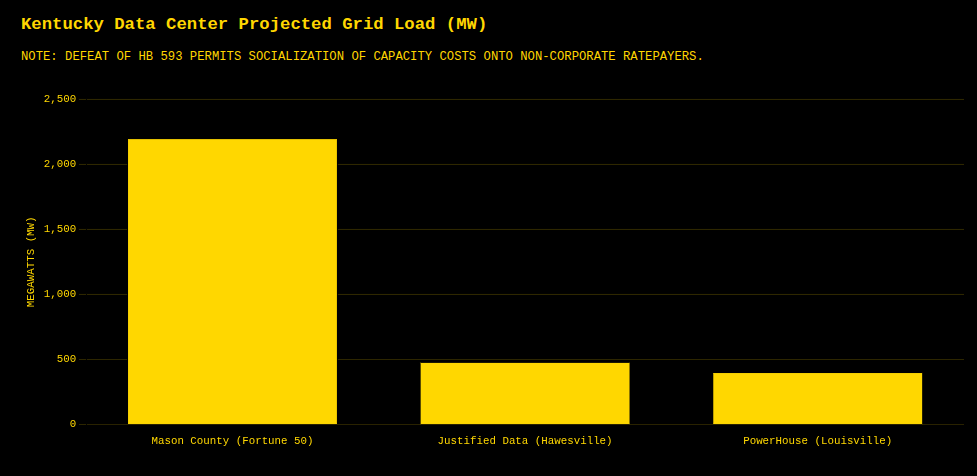
In Hancock County, digital infrastructure developer TeraWulf Inc. executed a strategic acquisition of the idled Century Aluminum Smelter, an industrial site that previously employed over 600 local workers before its closure in 2022. Renamed the “Justified Data” campus, TeraWulf’s project represents an estimated $3 billion to $4 billion investment designed to deliver a 480-megawatt (MW) high-performance computing campus. TeraWulf’s strategy centers on repurposing the massive, heavy-duty electrical transmission infrastructure left behind by the industrial smelter across more than 250 buildable acres.
The operational execution of the Hawesville project involves major national contractors and complex utility agreements. In March 2026, TeraWulf selected the Fluor Corporation for master planning and preconstruction services. Fluor’s North American Data Center Execution Hub in Greenville, South Carolina, was assigned to lead the project, with John Palmer, Fluor’s senior vice president for advanced technologies, citing the need for speed and end-to-end project delivery to meet the aggressive second-half 2027 completion target.
To power the facility, Big Rivers Electric Corporation submitted a proposed Retail Electric Service Agreement to the Kentucky Public Service Commission (PSC) on April 14, 2026. The agreement, executed between Big Rivers, Kenergy Corp., and TeraWulf subsidiary Justified DataPower LLC, transitions the site from a unique legacy arrangement into a market-based, pass-through structure. Under this arrangement, Big Rivers secures wholesale energy and capacity from the Midcontinent Independent System Operator (MISO) market, transferring it to Kenergy for retail service to TeraWulf, thereby utilizing the 482 MW of transmission capacity already available at the site.
Urban Development: PowerHouse Louisville
While the majority of hyperscale projects target rural regions, the industry has also penetrated urban environments. In Jefferson County, a joint venture between Poe Companies and PowerHouse Data Centers is actively transforming 150 acres into a 402 MW hyperscale campus located west of Shively. Marketed as Kentucky’s first large-scale urban data center campus engineered specifically to handle AI data loads, the PowerHouse Louisville project underscores the diverse geographical strategies employed by developers seeking immediate access to established grid infrastructure.
| Key Data Center Developments in Kentucky (2026) | ||||
|---|---|---|---|---|
| Project Name / Location | Developer / Operator | Estimated Power Capacity | Site Acreage | Estimated Investment |
| Federal AI Site (Paducah) | U.S. Department of Energy | Undisclosed | 3,500 acres | Undisclosed |
| Unnamed Project (Mason County) | “Fortune 50” Tech Company | 2.2 GW (Projected EKPC load) | 2,080 acres | $14 Billion |
| Justified Data (Hawesville) | TeraWulf Inc. | 480 MW | 250+ acres | $3 Billion – $4 Billion |
| Simpson County Project (Franklin) | TenKey LandCo, LLC | Undisclosed (On-site generation) | 200+ acres | $1.6 Billion |
| PowerHouse Louisville | PowerHouse Data Centers / Poe | 402 MW | 150 acres | Undisclosed |
Grassroots Resistance and Zoning Litigation
The rapid influx of data center proposals ignited fierce opposition from rural communities concerned about the depletion of prime agricultural land, extreme energy and water consumption, and the lack of corporate transparency. The friction between local residents and multinational technology companies resulted in extensive zoning litigation and the formation of highly organized citizen action groups.
The Mason County Land Dispute
The most contentious land-use battle in the state occurred in Mason County, where a “Fortune 50 tech company” sought to construct a massive, $14 billion hyperscale AI data center complex on 2,080 acres of agricultural farmland located north of the AA Highway and west of Maysville. Represented by attorney Tanner Nichols of the law firm Frost Brown Todd, the unnamed company utilized strict non-disclosure agreements (NDAs) with local officials, maintaining absolute anonymity regarding its corporate identity. Nichols argued that the project would generate up to 2,000 construction jobs, 400 operational jobs, up to $40 million in water and wastewater improvements, and a $500 million investment in electrical infrastructure.
The opacity of the project catalyzed intense local opposition. Residents formed the nonprofit grassroots organization “We Are Mason County,” led by individuals such as treasurer Janet Garrison, and retained attorney Hank Graddy. Graddy argued that the anonymity of the developer fundamentally compromised the public’s right to cross-examine the entity seeking to irrevocably alter the county’s landscape. Local farmers, including those owning property adjacent to the proposed site off Big Pond Road, rejected purchase offers that reportedly reached up to $26 million in one instance and nearly $8 million in another. Residents such as Delsia Bare, Dusty Porter, and Alyssa Humphries voiced concerns regarding the industrial conversion of farmland, continuous construction noise, and property value degradation.
The regulatory process in Mason County was highly fractured. On March 25 and 26, 2026, the Maysville-Mason County Joint Planning Commission (JPC) held public hearings regarding the application by the Mason County Industrial Development Authority (IDA) to rezone 28 properties to “I-3 industrial” to accommodate the campus. Graddy challenged the legality of the application, asserting that the IDA was not the true party of interest and that the application was legally defective. The JPC ultimately failed to make a rezoning recommendation.
On March 26, We Are Mason County filed a formal complaint and petition against the Mason County Fiscal Court, the JPC, and Planning and Zoning Administrator George Larger III. The lawsuit alleged that the previously filed data center ordinance was arbitrary, improper, and illegal because the Mason County Comprehensive Plan was explicitly silent regarding data centers and actively called for the protection of prime farmland. Despite the ongoing litigation, the Mason County Fiscal Court proceeded with special meetings, guided by County Judge-Executive Owen McNeill and County Attorney John Estill, establishing strict parameters for argumentation—limiting presentations to 30 minutes per side and restricting the introduction of new evidence outside the JPC record, citing precedents such as City of Louisville v. McDonald (470 S.W. 2d 173) and Res. Dev. Corp. v. Campbell Cnty. Fiscal Ct. (543 S.W. 2d 225).
The Simpson County Zoning Conflict
A parallel conflict unfolded in Simpson County, where TenKey LandCo, LLC proposed a $1.6 billion data center campus featuring three 200,000-square-foot facilities and on-site power generation on over 200 acres off Exit 2 on Steele Road in Franklin. The regulatory history of the TenKey project highlights the chaotic nature of local data center governance. In late 2025, the Franklin Planning and Zoning Commission unanimously rejected a proposed text amendment—submitted by Tim Crocker, legal representative for the applicants—that would have added data centers as permitted uses for heavy industry land. The commission ruled the amendment too vague and directed developers to utilize the conditional-use process overseen by the Franklin Board of Adjustments.
However, in March 2026, the planning and zoning commission reversed its stance, voting unanimously to approve TenKey’s preliminary development plan after hours of highly contentious public comment, during which several opposed residents were escorted out by law enforcement. The approval was contingent upon TenKey providing more data regarding stormwater drainage and power generation regulations.
This decision triggered dual lawsuits. “Franklin Citizens for Responsible Development,” an opposition group represented by attorney Timothy Mayer, filed suit in Simpson Circuit Court against the planning commission, TenKey LandCo, SPJD Partners LLC, and OTN Development Company LLC (associated with project developer Adam DeSimone). The lawsuit sought to void the preliminary development plan, arguing that the commission’s approval violated its own zoning ordinance and lacked substantial evidentiary findings. Riley Bright, an affected property owner operating Bright’s Antique World, submitted an affidavit arguing that the facility’s generators would produce “silent noise,” fumes, and pollutants that would severely damage local commercial activity.
Simultaneously, TenKey LandCo initiated litigation against Simpson County, challenging an ordinance that required the company to obtain a conditional use permit, an ordinance designed specifically to afford the county greater operational oversight of the facility. These overlapping lawsuits demonstrate the extent to which data center developers are willing to utilize the judicial system to override local municipal authority when faced with grassroots resistance.
The Legislative Void: Ratepayers, Lobbying, and Frankfort
The localized disputes in Mason and Simpson counties inevitably escalated to the state legislature during the 2026 General Assembly in Frankfort. Lawmakers faced the immediate challenge of addressing the massive utility infrastructure costs associated with data centers. Because hyperscale facilities require continuous, immense power loads—such as the 2.2 gigawatts projected for the Mason County site by the East Kentucky Power Cooperative (EKPC)—utilities must construct new transmission lines, substations, and generation facilities. Historically, the costs of such grid expansions have been socialized and passed down to standard residential and commercial ratepayers.
House Bill 593: The Attempted Ratepayer Guardrails
To prevent this socialization of costs, Republican Representative Josh Bray of Mount Vernon sponsored House Bill 593. HB 593 mandated that utility providers issue or file a tariff setting forth the application process for prospective data center customers. Crucially, the bill established strict contract requirements to prevent “the subsidization of data center customers by non-data center customers through rates or by any other means,” and explicitly prohibited the allocation of infrastructure construction costs to customers served by natural gas, water, or wastewater utilities. The legislation also required utility providers to conduct rigorous studies to ensure that data centers could be safely and efficiently served without generating negative service or rate impacts for the broader public.
The measure received broad bipartisan support initially, passing the Kentucky House of Representatives by a 90-8 margin in March 2026. Democratic Representative Adam Moore of Lexington also introduced aligned legislation requiring data center companies to agree to ratepayer protection contracts.
Regulatory Capture and the Defeat of Data Center Legislation
Despite the overwhelming House vote, HB 593 faced intense opposition from the utility sector, specifically investor-owned utilities Louisville Gas & Electric (LG&E) and Kentucky Utilities (KU), as well as the nonprofit EKPC. These utility monopolies, alongside data center developers, preferred to maintain their direct negotiating power with the Kentucky Public Service Commission (PSC), which had already begun approving specialized data center tariffs.
The lobbying efforts proved highly effective in the Kentucky Senate. In the final days of the legislative session, the provisions of HB 593 were attached to a broader measure, Senate Bill 197. However, on April 15, 2026—the final day of the session—the data center regulations were abruptly stripped from SB 197 by a committee before the bill cleared the full chamber. Kentucky Senate President Robert Stivers, a Republican from Manchester, defended the removal, arguing that data center regulations require differentiated treatment due to the distinctions between nonprofit and for-profit utilities operating under PSC oversight.
The defeat of HB 593 was accompanied by the failure of other regulatory measures, including Senate Bill 319, which would have required data center projects built on agricultural land to provide decommissioning plans and surety bonds to guarantee site restoration. The legislative session concluded with Kentucky having failed to implement any statutory guardrails against the socialization of data center utility costs, a failure that Representative Bray characterized as a missed opportunity to protect constituents in an “already unaffordable world”. The lack of state-level regulation prompted political figures such as Erin Petrey, a Democratic candidate for Congress and self-proclaimed sustainability evangelist, to launch a non-partisan initiative pushing for an indefinite statewide and federal moratorium on data center construction until strict regulatory frameworks are established.
The 4th Congressional District Primary: A Proxy War of National Interests
The regulatory vacuum surrounding AI infrastructure, corporate subsidies, and utility frameworks established the backdrop for the most expensive House primary in United States history. On May 19, 2026, the Republican primary in Kentucky’s 4th Congressional District culminated with challenger Ed Gallrein defeating seven-term incumbent Representative Thomas Massie, securing 54.8% of the vote (57,053 votes) to Massie’s 45.2% (47,018 votes).
The race generated between $32 million and $35 million in total ad spending, a figure completely unprecedented for a single House seat, particularly in a rural district. An analysis of the financial architecture of the election reveals that the primary was not determined by localized, in-state constituency politics; in-state contributions accounted for less than 6% of the overall cash flow. Instead, the race served as a proxy war executed by national super PACs, technology sector executives, and foreign policy mega-donors who viewed Massie’s strict ideological record as a fundamental threat to their respective legislative agendas.
The Ideological Anomalies of Thomas Massie
Representative Massie, an MIT-educated engineer, had cultivated a reputation as a fierce, uncompromising libertarian-conservative during his 14-year tenure. Known informally as “Mr. No,” Massie frequently frustrated both Republican leadership and the corporate sector by consistently voting against broad government spending bills, foreign aid packages, and corporate infrastructure subsidies.
Massie alienated several highly powerful factions simultaneously:
- The Trump Base: Massie frequently clashed with former President Donald Trump. He was one of only two House Republicans to vote against Trump’s signature “One Big Beautiful Bill,” citing severe concerns over the national debt, sustained inflation, and high interest rates. Massie also opposed Trump’s military actions against Iran, partnering with Democratic Representative Ro Khanna to force a House floor vote on a war powers resolution designed to curb the President’s authority. Furthermore, Massie leveraged a discharge petition to force the release of the Jeffrey Epstein files, directly embarrassing Trump, who had previously dismissed the issue as a “Democrat hoax,” and holding a joint press conference on the matter with Khanna and Representative Marjorie Taylor Greene.
- The Foreign Policy Lobby: Adhering to a strict non-interventionist stance, Massie consistently opposed all foreign aid, including military assistance to Israel. He famously refused to accept campaign contributions from the American Israel Public Affairs Committee (AIPAC), rendering him a primary target for pro-Israel lobbying organizations.
- The Technology and AI Sector: Massie’s rigid stance on domestic surveillance directly threatened the commercial expansion of artificial intelligence. Weeks before the primary, Massie introduced aggressive legislation requiring federal government agencies to obtain explicit warrants before deploying AI surveillance tools, facial recognition, biometric tracking, or accessing data held by internet brokers. This legislation threatened to disrupt highly lucrative federal AI and cloud computing contracts. Additionally, Massie’s voting record generally opposed the type of corporate immunity and infrastructure subsidization sought by data center developers.
Ed Gallrein: The Recruited Challenger
Ed Gallrein, a farmer, business owner, and retired U.S. Navy SEAL who served from 1984 to 2014, was specifically recruited by Trump allies to unseat Massie. Gallrein had previously run for the Kentucky Senate in 2024, losing the Republican primary for District 7 to Aaron Reed by a narrow margin of 39.3% to 38.3%.
The primary momentum for Gallrein was heavily reliant on an endorsement from Donald Trump, issued on October 17, 2025. Trump had vowed to lead the charge against Massie months prior, following Massie’s refusal to support a short-term government funding bill, stating publicly that dealing with Massie was “horrible” and asserting, “I don’t think he’s a Republican. I think he’s actually a Democrat”.
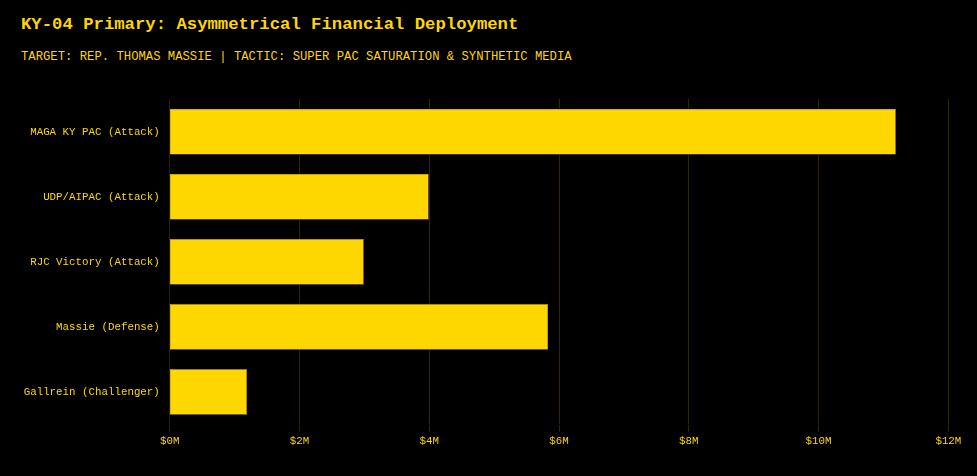
Gallrein’s campaign platform centered on broad national conservative themes—cutting taxes, stopping reckless spending, and fully funding Border Patrol and ICE to secure the border—but his personal fundraising of approximately $1.2 million was dwarfed by the massive influx of independent super PAC spending organized to support him and attack Massie.
Campaign Finance Architecture: The Multi-Billionaire Coalition
The financial strategy deployed against Massie involved a coalition of convenience among highly capitalized interest groups that shared little ideological overlap beyond their mutual desire to remove the incumbent from office. According to FEC data covering January 1, 2025, to April 29, 2026, Massie raised a substantial $5,541,899.88, including $3,538,343.32 in itemized individual contributions, and spent $5,840,666.14. However, this internal campaign funding was completely overwhelmed by over $18.6 million in negative outside independent expenditures.
The MAGA KY PAC and Foreign Policy Mega-Donors
The largest single financial entity in the race was the “MAGA KY PAC” (sometimes documented as the Mega Kentucky PAC), which spent over $11.2 million executing a highly aggressive negative advertising campaign against Massie. The PAC was established and managed by Chris LaCivita, Donald Trump’s 2024 co-campaign manager, demonstrating the direct involvement of the Trump political apparatus.
However, FEC disclosures revealed that the financial engine behind the MAGA KY PAC was almost entirely decoupled from the populist grassroots base of the MAGA movement. The PAC was underwritten almost solely by three prominent hawkish, pro-Israel billionaires: hedge-fund executives Paul Singer and John Paulson, and casino billionaire Miriam Adelson (widow of Sheldon Adelson). By funneling capital through a PAC branded with the MAGA moniker, these foreign policy mega-donors successfully masked their specific geopolitical objectives behind the broader populist appeal of the Trump endorsement.
AIPAC and the Republican Jewish Coalition
In addition to the MAGA KY PAC, traditional pro-Israel advocacy organizations directly entered the district with unprecedented force. The United Democracy Project (UDP)—the super PAC arm associated with AIPAC—spent over $4 million on saturation ad campaigns explicitly targeting Massie’s consistent votes against foreign aid packages. The Republican Jewish Coalition (RJC) Victory Fund contributed an additional $3 million in independent expenditures during the first quarter of 2026.
RJC spokesman Sam Markstein characterized Massie as a “grandstanding disaster” and a “thorn in the side of President Trump, the Republican Party and the Jewish community writ large”. Massie openly acknowledged the source of the opposition during his concession speech, stating, “I would have come out sooner, but I had to call my opponent and concede, and it took a while to find Ed Gallrein in Tel Aviv”. The deployment of over $7 million by single-issue foreign policy PACs into a rural Kentucky primary signaled a decisive shift in how national lobbying groups enforce congressional discipline regarding international aid.
Corporate America and the Chamber of Commerce
The campaign also featured a significant departure from established corporate political strategy. The U.S. Chamber of Commerce’s political action committee, breaking from its historical precedent of supporting Republican incumbents, officially endorsed Ed Gallrein and pumped financial resources into the 4th District.
The Chamber’s intervention was driven by Massie’s rigid libertarian opposition to domestic infrastructure subsidization and corporate regulations. Crucially, the Chamber of Commerce acts as a primary lobbying force for the Data Center Coalition, an industry group actively working to preempt state-level regulations and secure favorable tax and utility environments for hyperscale infrastructure. By endorsing Gallrein early in the cycle, the Chamber aligned institutional corporate America with the Trump populist base to eliminate a mutual legislative obstacle.
| Major Campaign Finance Entities (KY-04 Primary, 2026) | |
|---|---|
| Entity / Candidate | Financial Metric / Expenditure |
| Thomas Massie for Congress (Official Campaign) | $5.54 Million Raised / $5.84 Million Spent |
| MAGA KY PAC (LaCivita, Singer, Paulson, Adelson) | $11.2 Million (Anti-Massie Independent Expenditures) |
| United Democracy Project (AIPAC) | $4.0+ Million (Anti-Massie Independent Expenditures) |
| RJC Victory Fund | $3.0 Million (Anti-Massie Independent Expenditures, Q1) |
| Ed Gallrein (Official Campaign) | $1.2 Million Raised (~97% Out-of-State) |
The Tech Sector, AI Super PACs, and Synthetic Media Weaponization
The final, and perhaps most unprecedented, element of the capital mobilized against Massie originated from the technology and artificial intelligence sectors. The 2026 election cycle was defined by the emergence of massive, industry-specific super PACs funded by cryptocurrency and AI executives, which collectively amassed war chests exceeding $321 million.
“Leading the Future” and the AI Political Agenda
The premier pro-AI super PAC, “Leading the Future,” launched in January 2026 with an announced funding goal of $125 million to $140 million. The PAC’s core objective is to advance a national AI framework—aligned with the Trump administration’s deregulatory executive orders—that explicitly preempts the diverse AI safety laws enacted by 38 separate states in 2025.
By the end of the first quarter of 2026, Leading the Future reported approximately $70 million in cash on hand. The PAC’s financial architecture is built on massive contributions from Silicon Valley elite, including $25 million from OpenAI President Greg Brockman and his spouse, Anna Brockman, and an additional $25 million from the venture capital firm Andreessen Horowitz (a16z), founded by Marc Andreessen and Ben Horowitz. Other major contributors included Elon Musk (xAI), the Winklevoss twins, and executives from the Gemini cryptocurrency exchange.
The crypto industry operated alongside the AI sector, with the Fairshake super PAC network—heavily funded by Coinbase, Ripple Labs, and a16z—raising $193 million and spending over $133 million targeting lawmakers unsupportive of “light-touch” regulatory frameworks. Concurrently, an aligned Republican-focused nonprofit, Innovation Council Action, pledged to spend an additional $100 million promoting a deregulatory AI agenda.
While Leading the Future focused a significant portion of its independent advertising through its Democratic affiliate, Think Big, targeting pro-regulation Democrats like New York’s Alex Bores (spending nearly $3.3 million in attack ads), the broader tech network actively engaged in the conservative sphere. Massie’s aggressive push to strip hyperscale data centers of localized immunities, combined with his introduction of the AI Surveillance Bill mandating strict warrants for federal AI procurement, placed him squarely in the crosshairs of Silicon Valley. Rather than donating directly to Gallrein’s rural Kentucky platform, tech executives distributed capital to the broader conservative super PACs, including Paul Singer’s MAGA KY PAC, ensuring that Massie’s push for digital regulation was neutralized.
The Deployment of AI Deepfakes in the 4th District
The financial involvement of the AI industry in the Kentucky primary resulted in a highly sophisticated, precedent-setting tactical deployment of the exact technology Massie sought to regulate. The 4th District primary served as a beta-testing ground for the weaponization of AI-generated synthetic media—commonly known as deepfakes—in a high-stakes federal election.
Despite the Commonwealth of Kentucky having passed state laws designed to curb deceptive political deepfakes, outside super PACs flooded local television, radio, and streaming airwaves with automated fabrications. Most notably, the MAGA KY PAC deployed AI-generated video advertisements depicting Thomas Massie holding hands and displaying physical affection toward progressive Democratic Representatives Alexandria Ocasio-Cortez and Ilhan Omar.
The advertisement was specifically engineered to destroy Massie’s standing with the deeply conservative electorate of northern Kentucky by generating a visceral, visually convincing association with the progressive left. Media trackers such as AdImpact noted that the strategy proved highly effective; it demonstrated to technology lobbyists and political operatives that AI-generated synthetic media could successfully shape the narrative of an election rapidly, exploiting the temporal lag before state regulatory agencies or digital platforms could effectively police or remove the deceptive content.
The success of the deepfake campaign against Massie underscores the broader strategic victory achieved by the technology sector and its aligned PACs in 2026. By utilizing AI to influence electoral outcomes, while simultaneously funding the political defeat of legislators attempting to regulate that exact technology, the industry successfully insulated itself against immediate federal oversight while clearing the path for uninterrupted physical and commercial expansion.
The events encompassing the Kentucky data center expansion and the 4th Congressional District primary illustrate a profound evolution in how corporate infrastructure development and national political finance interact. The aggressive acquisition of thousands of acres of agricultural land for hyperscale computing facilities by entities shielded behind non-disclosure agreements demonstrates the extent to which multinational capital can overwhelm localized municipal zoning authority and grassroots opposition. Furthermore, the successful lobbying by utility monopolies to strip ratepayer protections from Kentucky state law highlights the systemic socialization of the massive energy costs required to sustain the artificial intelligence revolution.
These physical and regulatory battles are fundamentally inextricably linked to the mechanisms of federal campaign finance. The defeat of Representative Thomas Massie, engineered through an unprecedented $35 million mobilization of super PAC capital, serves as a definitive demonstration of modern political enforcement. By aligning hawkish foreign policy mega-donors with Silicon Valley tech executives and the populist political machinery of the former President, external corporate interests successfully executed a highly targeted proxy war within a rural Kentucky district. The outcome ensures that legislative efforts to mandate federal warrants for AI surveillance, halt the socialization of utility costs for data centers, or restrict foreign military aid face severe, well-funded electoral consequences, effectively reshaping the boundaries of congressional independence in the modern technological era.
Appendix: Compiled Research Links
- https://thehill.com/homenews/campaign/5883936-massie-loses-kentucky-house-primary/
- https://www.yahoo.com/news/articles/hateful-ads-pervading-thomas-massie-164553505.html
- https://www.instagram.com/reel/DYhdj-gD67D/
- https://www.instagram.com/p/DYfO-atFuZL/
- https://www.youtube.com/watch?v=u6CTxCZtINs
- https://www.facebook.com/TheHill/posts/millions-of-dollars-are-flowing-into-advertisements-seeking-to-move-the-needle-o/1272731004715318/
- https://news.bgov.com/bloomberg-government-news/chamber-of-commerce-pac-backs-massie-kentucky-primary-challenger
- https://www.instagram.com/p/DYm7teNFmST/
- https://www.youtube.com/watch?v=27Apy4qrLiQ
- https://www.axios.com/2026/05/11/thomas-massie-ed-gallrein-kentucky-aipac-trump
- https://www.lpm.org/news/2026-05-05/ai-deepfake-ads-attack-massie-and-gallrein-in-northern-kentucky-gop-primary
- https://www.politico.com/newsletters/playbook/2026/04/15/the-140m-future-of-politics-00872575
- https://www.newyorker.com/news/our-local-correspondents/how-a-congressional-primary-became-a-proxy-battle-over-ai
- https://fox2now.com/hill-politics/massie-primary-tests-trumps-grip-on-gop/
- https://responsiblestatecraft.org/massie-loss-aipac-primary/
- https://www.wsj.com/politics/elections/thomas-massies-lonely-and-expensive-fight-against-trump-40dad789
- https://www.wlky.com/article/outside-spending-massie-politics-kentucky/71388889
- https://www.notus.org/2026-election/massie-gallrein-primary-spending-donors
- https://www.kentucky.com/news/politics-government/article314577436.html
- https://www.uschamber.com/improving-government/u-s-chamber-endorses-candidate-ed-gallrein-for-kentuckys-fourth-congressional-district
- https://www.facebook.com/kentuckycom/posts/outside-pac-spending-for-rep-thomas-massie-and-gallrein-has-been-funded-exclusiv/1344354791061940/
- https://kentuckylantern.com/2025/10/22/central-kentucky-us-house-candidates-say-their-fundraising-reports-show-strength/
- https://www.instagram.com/p/DYk0BgLleou/?img_index=4
- https://www.instagram.com/reel/DYjnnyAkcsZ/
- https://www.nationalreview.com/2026/05/the-thomas-massie-lesson/
- https://www.cincinnati.com/story/news/politics/elections/2026/02/24/whos-behind-the-millions-being-spent-in-massie-gallrein-race/88724452007/
- https://www.instagram.com/p/DYk0BgLleou/?img_index=2
- https://www.facebook.com/Reuters/posts/ed-gallrein-defeated-thomas-massie-in-kentuckys-primary-with-549-of-the-votes-to/1552339236756803/
- https://www.fec.gov/data/candidate/H6KY04171/
- https://www.quiverquant.com/election-fundraising/house/KY/4
- https://www.klc.org/News/13106/data-centers-in-kentucky-opportunities-and-considerations
- https://www.lpm.org/news/2026-04-15/kentucky-data-center-regulations-stripped-from-bill-as-legislative-session-closes
- https://www.powerhousedata.com/news/developers-unveil-plans-for-large-tech-data-center-in-louisville
- https://www.wkyufm.org/news/2026-05-11/a-data-center-insider-wants-to-halt-their-construction-in-kentucky
- https://www.youtube.com/watch?v=0TwA5ttBAhU
- https://kentuckylantern.com/2026/05/11/local-data-center-battles-in-kentucky-are-contentious-theyre-also-inspiring-runs-for-office/
- https://www.energy.gov/em/articles/us-energy-department-seeks-proposals-ai-data-centers-energy-projects-paducah-site
- https://www.wdrb.com/news/business/kentucky-site-chosen-for-federal-ai-infrastructure-project/article_c32a2b1d-c8f4-4851-8c9d-d348cc8222cb.html
- https://www.youtube.com/watch?v=QhNbe0AQOIU
- https://local12.com/news/local/data-center-approved-northern-kentucky-mason-county-maysville-ai-artificial-intelligence-tech-technology-company-business-funding-cost-price-property-residents-regulations-lawsuit-suing-case-city-council-cincinnati
- https://cleanview.co/data-centers/kentucky
- https://spectrumnews1.com/ky/louisville/news/2026/02/14/ai-database-hawesville
- https://www.duboiscountyherald.com/perry_county_news/news/ai-data-center-coming-across-the-river-in-kentucky/article_90351ad7-0aea-5390-9903-d0b56941681f.html
- https://www.theguardian.com/us-news/2026/may/20/trump-news-at-a-glance-president-forces-out-another-republican-who-crossed-him
- https://news.ballotpedia.org/2026/05/20/ed-gallrein-defeated-incumbent-rep-thomas-massie-in-the-republican-primary-for-kentuckys-4th-congressional-district-on-may-19-2026/
- https://www.aljazeera.com/news/2026/5/20/republican-thomas-massie-who-stood-up-to-trump-defeated-in-kentucky-primary
- https://ballotpedia.org/Kentucky%27s_4th_Congressional_District_election,2026(May_19_Republican_primary)
- https://www.washingtonexaminer.com/news/campaigns/congressional/4575268/kentucky-4th-congressional-district-primary-thomas-massie-ed-gallrein/
- https://www.newsweek.com/massie-vs-trump-backed-gallrein-final-polls-odds-11964100
- https://www.aterio.io/insights/us-data-centers/dc/company-not-disclosed-38022-ky
- https://www.weku.org/the-commonwealth/2026-03-27/grassroots-organization-announces-plans-to-file-suit-against-mason-county-data-center-proposal
- https://www.masoncountypost.com/p/lawsuit-challenges-massive-ai-data
- https://www.cityofmaysvilleky.gov/departments/codes_department/data_center.php
- https://wearemasoncountyky.org/
- https://maysville-online.com/news/214198/mason-county-fiscal-court-schedules-special-meetings-over-data-center-amendment
- https://investors.terawulf.com/news-events/press-releases/detail/140/terawulf-reports-first-quarter-2026-results
- https://www.terawulf.com/our-operations
- https://www.globenewswire.com/news-release/2026/05/08/3290994/0/en/terawulf-reports-first-quarter-2026-results.html
- https://d1io3yog0oux5.cloudfront.net/_566c3c88fc927ebef0698674ef867646/terawulf/db/2265/21666/pdf/TeraWulf+Q1+2026+Investor+Presentation+%28May+2026%29.pdf
- https://www.poecompanies.com/portfolio/data-centers/
- https://www.youtube.com/watch?v=zVkbGNAQnlc
- https://wearemasoncountyky.org/meetings/
- https://maysville-online.com/news/214327/jpc-fails-to-make-rezoning-recommendation-for-data-center-project
- https://www.realtor.com/news/trends/kentucky-data-center-mason-county-maysville/
- https://www.terawulf.com/wulf-compute
- https://www.datacenters.com/terawulf-justified
- https://psc.ky.gov/trf4/uploadedFiles/900_Big_Rivers_Electric_Corporation/04142026121035/Cover_Letter_Redacted.pdf
- https://www.constructiondive.com/news/terawulf-fluor-data-center-preconstruction-kentucky-megaproject/815027/
- https://www.motherjones.com/politics/2026/05/thomas-massie-ed-gallrein-trump-kentucky-primary/
- https://www.wvxu.org/politics/2024-05-20/northern-kentucky-primary-ballots
- https://www.motherjones.com/politics/2026/05/thomas-massie-has-always-been-a-pain-in-the-ass/
- https://www.weku.org/2012-12-28/remembering-gen-schwarzkopf-military-hero-of-his-generation
- https://punchbowl.news/article/washington/pac-2026/
- https://www.thenation.com/article/politics/crypto-ai-super-pacs-election-spending-big-tech-dark-money-2026/tnamp/
- https://www.ajc.com/politics/2026/03/big-money-pours-into-georgias-special-election-to-replace-greene/
- https://prospect.org/2026/02/20/aipac-ai-pacs-crypto-midterms-congress-chicago/
- https://punchbowl.news/archive/21926-am/
- https://hoptownchronicle.org/a-data-center-insider-wants-to-halt-their-construction-in-kentucky/
- https://www.wkyufm.org/news/2026-03-04/feet-to-the-fire-preliminary-plan-for-franklin-data-center-approved
- https://www.wkyufm.org/news/2026-04-14/second-lawsuit-filed-over-proposed-data-center-in-simpson-county
- https://bgdailynews.com/2026/04/08/suit-filed-over-data-center/
- https://mountainstatespotlight.org/2026/05/03/mingo-county-data-centers/
- https://www.kwalliance.org/news/legislative-update
- https://www.newsfromthestates.com/article/budget-committee-funds-data-center-ban-dozens-other-measures-during-weekend-meetings
- https://www.americanprogress.org/article/state-climate-action-in-2026-how-states-are-delivering-real-benefits-through-climate-and-clean-energy-policy/
- https://elections.transformernews.ai/pacs/C00916114
- https://punchbowl.news/article/campaigns/ai-network-texas/
- https://aspenpolicyacademy.org/news/what-enterprises-need-to-know-about-silicon-valleys-pro-ai-super-pacs/
- https://apps.legislature.ky.gov/record/26rs/sb319.html
- https://linknky.com/news/2026/04/16/kentucky-legislature-2026-housing-bill-fails-data-center-regulation/
- https://legiscan.com/KY/bill/HB593/2026
- https://www.reddit.com/r/lexington/comments/1sn3kmi/kentucky_data_center_regulations_stripped_from/
- https://apps.legislature.ky.gov/record/26rs/hb593.html
- https://lexingtonky.news/2026/04/16/kentucky-legislature-fails-to-pass-major-housing-data-center-bills/
- https://www.ft.com/content/ede39e87-c489-432c-b5e0-09da19b591dc?syn-25a6b1a6=1
- https://www.fec.gov/data/candidate/H2KY04121/
- https://www.aljazeera.com/opinions/2026/5/20/massie-defeated-the-israel-lobbys-pyrrhic-victory-in-kentucky
- https://whyy.org/episodes/primaries-rabb-massie-elections/
AI Data Center Lobbying Efforts: Gilded Grifters Edition
The rapid proliferation of generative artificial intelligence (AI) has precipitated a structural and financial shift in the corporate lobbying landscape of the United States. Historically, technology sector advocacy focused on localized software issues such as consumer data privacy, intellectual property disputes, and antitrust scrutiny. However, the integration of high-performance computing—specifically the deployment of Graphics Processing Units (GPUs), Tensor Processing Units (TPUs), and High-Bandwidth Memory (HBM) required for massively parallel AI processing—has transformed technology conglomerates into heavy industrial actors. This hardware revolution has created an unprecedented demand for electrical power, cooling water, and physical real estate, triggering a massive wave of capital expenditure and political mobilization.
To secure these physical resources, the technology sector has deployed a historic, multi-tiered lobbying apparatus. In 2025, one in four active federal lobbyists—totaling more than 3,500 individuals—was engaged in AI-related advocacy. This represents a 170% increase over a three-year period, while the number of lobbyists specifically dedicated to data center infrastructure expanded by 500%. The electric manufacturing and equipment sector alone, which includes major tech and infrastructure firms such as Microsoft and Oracle, poured more than $226 million into lobbying activities in 2025.
This massive deployment of political capital is designed to navigate an increasingly hostile regulatory environment. The expansion of hyperscale data centers is straining municipal utilities, threatening regional grid reliability, and facing intense, bipartisan pushback from local communities. Consequently, technology conglomerates have forged strategic alliances with the petrochemical industry, midstream pipeline operators, and utility monopolies to circumvent local zoning laws, secure federal environmental exemptions, and socialize the massive infrastructural costs of the AI revolution onto public ratepayers. This report provides an exhaustive, data-driven analysis of the financial expenditures, retained firms, strategic deployments, targets, and direct electoral interventions characterizing this new era of AI and data center lobbying.
The Macro-Economic and Geopolitical Imperative of AI Infrastructure
The scale of the lobbying effort is directly proportional to the capital expenditures at stake. Global investments in data centers are projected to reach approximately $6.7 trillion to $7.0 trillion by 2030, driven predominantly by the mass adoption of generative AI. Wall Street consensus estimates for hyperscaler AI capital spending in 2026 alone sit at $527 billion, with potential upside projections reaching $650 billion to $700 billion. In the United States, major tech companies—including Microsoft, Meta, Google, and Amazon—collectively spent $125 billion on AI data centers between January and August 2024 alone.
This expenditure is justified politically through a geopolitical framework. Industry lobbyists consistently frame AI infrastructure expansion as a zero-sum capacity race between the United States and China. Over the last four years, China has built more power generation capacity than the entirety of the existing U.S. grid combined, adding electrical capacity equivalent to 40% of the entire U.S. capacity in a single year. China’s AI providers are also expected to invest $70 billion in data centers for overseas expansion.
Tech lobbyists leverage this data to argue that any regulatory delay, environmental review, or local zoning moratorium is tantamount to ceding global technological supremacy to a foreign adversary. This narrative has resonated deeply within the executive branch. The Biden administration issued executive orders in January 2025 to support the construction of AI data centers on federal sites by private companies, while the subsequent Trump administration established non-binding agreements with Amazon, Google, Meta, Microsoft, OpenAI, Oracle, and xAI to maintain U.S. dominance while managing utility rate impacts.
The Federal Lobbying Apparatus: Capital, Firms, and Strategic Targets
The financial footprint of AI and technology lobbying is characterized by record-breaking internal expenditures and the aggressive retention of elite K Street contract firms. The ecosystem is dominated by legacy Big Tech conglomerates, alongside a new cohort of “pure-play” AI laboratories. Furthermore, corporate dominance is highly evident; 91 of the top 100 lobbying entities engaged in AI are corporations or corporate trade associations, with the U.S. Chamber of Commerce leading the sector by retaining 91 dedicated AI lobbyists.
The industry relies heavily on the “revolving door” phenomenon to bypass bureaucratic friction. In 2025, 53% of the lobbyists representing the electric manufacturing and equipment sector were former government officials who transitioned to private lobbying firms, often lobbying the exact regulatory agencies they previously oversaw.
The Apex Spenders: Big Tech and Cloud Providers
The five largest in-house spenders in the technology sector have collectively surpassed $100 million in federal influence expenditures, deploying internal personnel alongside external hybrid legal-lobbying firms.
| Corporation / Entity | 2025 Federal In-House Spend | Primary Contract Lobbying Firms Retained | Core Lobbying Objectives & Strategic Targets |
|---|---|---|---|
| Meta Platforms | $26.29 Million | Invariant LLC, BGR Group, Akin Gump Strauss Hauer & Feld | The highest corporate spender across any industry, employing roughly 87 active lobbyists. Focuses on automated open-source AI regulations, managing data center footprint growth, and consumer privacy. |
| Amazon / AWS | $17.89 Million | Brownstein Hyatt Farber Schreck, Holland & Knight, Cornerstone Government Affairs | Employs 48 internal AI lobbyists. Heavy focus on securing localized energy grid access, nuclear power contracts, and navigating municipal utility boards via Cornerstone. |
| Alphabet (Google) | $13.10 – $16.62 Million | Ballard Partners, Capitol Counsel LLC, Crossroads Strategies | Retains Ballard Partners for fast-track physical site development. Focuses on global data center expansion, grid reliability, and mitigating antitrust threats while scaling infrastructure. |
| Microsoft | $9.36 Million | Covington & Burling LLP, Fierce Government Relations, Holland & Knight | Leverages over 60 active internal lobbyists (63 specifically for AI). Focuses on tying its Azure AI ecosystem to federal and Department of Defense computing contracts, and managing telecom policy. |
| Nvidia | $4.95 Million | Brownstein Hyatt Farber Schreck, Akin Gump Strauss Hauer & Feld | The fastest-growing spender on K Street; budget ballooned nearly 8x higher than 2024. Focuses heavily on managing complex chip export controls, semiconductor supply chains, and supercomputing energy priority. |
The lobbying strategies of these organizations reflect their specific operational bottlenecks. Alphabet’s retention of Ballard Partners is strategically calibrated to accelerate physical site development and bypass traditional zoning delays. Amazon’s reliance on Cornerstone Government Affairs targets municipal utility boards, reflecting Amazon Web Services’ (AWS) desperate need to secure local grid connections. Nvidia has focused its rapidly expanding capital on securing favorable supercomputing hardware trade policies, ensuring that its hardware dominance is not curtailed by federal export restrictions.
Pure-Play AI Laboratories: The Upstart Lobby and Structural Controversies
While traditional technology giants dominate gross spending, pure-play AI development laboratories are expanding their political footprints at an unprecedented rate, transitioning from insular research organizations to aggressive political actors.
| AI Laboratory | 2025 Federal Lobbying Spend | Primary Lobbying Firms Retained | Core Lobbying Objectives & Strategic Targets |
|---|---|---|---|
| Anthropic | ~$3.13 Million | DLA Piper | Outspent OpenAI in Q1 2026. Focuses heavily on pushing for national security AI integration while navigating federal safety rules and defense contracts. |
| OpenAI | ~$2.99 – $3.00 Million | Invariant LLC | Increased lobbying seven-fold. Focuses on intellectual property disputes, federal procurement, and global data center energy policy. |
OpenAI’s political strategy is notable for its aggressive integration of former political operatives and its efforts to restructure its corporate governance to attract capital. The firm hired a former Trump administration adviser to run its global data center energy policy. Simultaneously, OpenAI hired lobbyists in Sacramento, California, specifically to oppose state-level bills aimed at regulating AI safety.
Furthermore, OpenAI is currently facing intense legal and regulatory scrutiny regarding its lobbying to restructure from a non-profit to a for-profit public benefit corporation. The California Attorney General, Rob Bonta, launched an investigation in late 2025 demanding information on how OpenAI intends to transfer assets out of its charitable trust, warning of the responsibility to protect charitable assets. Consumer advocacy groups, such as Public Citizen, have aggressively lobbied the Attorneys General of California and Delaware to strip OpenAI of its non-profit tax status, arguing it operates entirely as a capitalist enterprise. Even competing tech conglomerates have intervened; Meta reportedly urged regulators to block OpenAI’s transition, arguing that allowing startups to enjoy non-profit tax write-offs while operating as lucrative tech firms would create dangerous precedents for Silicon Valley. Elon Musk has also sued to block this conversion.
The industry is also beginning to lay the groundwork for federal financial intervention. In November 2025, OpenAI’s Chief Financial Officer, Sarah Friar, floated the concept of a federal government “backstop” for AI infrastructure investments, citing the economic importance of maintaining technological superiority over China. Although the comments were quickly walked back following public outrage, industry analysts interpret this messaging as the genesis of an “AI bailout” movement, designed to socialize the financial risks of the AI bubble if the technology fails to yield the promised economic returns.
The Industrial Alignment: Energy, Pipelines, and Fossil Fuels
Because AI hyperscale data centers operate continuously near peak capacity, they require massive volumes of uninterrupted base-load electricity. United States data centers consumed 183 terawatt-hours (TWh) of electricity in 2024, representing 4% of the nation’s total output. By 2030, this demand is projected to climb to 426 TWh, accounting for between 9% and 17% of all U.S. power generation. In states with dense infrastructure, the numbers are extreme; data centers are projected to consume between 41% and 59% of Virginia’s total electricity by 2030.
To navigate this physical reality, the technology sector has forged a powerful lobbying alliance with the fossil fuel and petrochemical sectors. This alignment is institutionalized in the “AI Infrastructure Coalition,” a highly influential lobbying arm co-chaired by former U.S. Representative Garret Graves (a leading advocate for oil and gas production) and former U.S. Senator Kyrsten Sinema. The coalition, which includes charter members like ExxonMobil alongside venture capital heavyweights such as Andreessen Horowitz (a16z), operates with the explicit goal of ensuring AI dominance by leveraging traditional, non-renewable energy resources.
This partnership has profound infrastructural impacts. Natural gas currently supplies over 40% of the electricity used by U.S. data centers, and the International Energy Agency (IEA) projects that natural gas and coal will supply over 40% of the additional electricity needed through 2030. This surging domestic demand is driving up natural gas prices, with projections indicating an increase to $4–$5/MMBtu by the late-2020s, heavily straining the broader energy market.
Consequently, fossil fuel operators are utilizing AI infrastructure demands to justify the construction of new midstream pipeline projects that would otherwise lack commercial viability, shifting from “supply-push” to “demand-pull” economics. Key industrial lobbying and infrastructure targets include:
- The Williams Companies: Investing over $5 billion to construct fast-deploying, behind-the-meter simple-cycle gas turbine plants. By 2027, these will add 6 gigawatts of capacity across key digital hubs, directly fueling OpenAI’s “Stargate” project in Texas, Meta’s “Socrates” project in Ohio, and xAI’s “Colossus” project in Tennessee.
- Energy Transfer: Despite a track record that includes 527 hazardous liquid spills and criminal convictions in Pennsylvania for environmental violations, Energy Transfer successfully pivoted its business model to secure a direct natural gas supply agreement for the 11-gigawatt HyperGrid data center project in Amarillo, Texas. This connects upstream Permian Basin molecules directly to downstream AI computing. The company also finalized the $2.7 billion Hugh Brinson Pipeline driven by demand-side data center contracts.
- Kinder Morgan: Proposing the $1.5 billion to $1.8 billion “Bullet Pipeline” to twin the South Mainline of the El Paso Natural Gas system. This 550-mile greenfield project is entirely driven by the 5.5 GW of planned data center load required by developers in Maricopa County and the broader Desert Southwest.
- EQT Midstream: Partnering with Homer City Redevelopment to supply up to 665,000 MMBTUs of natural gas per day to a 4.4 gigawatt, 3,200-acre on-site power plant powering a hyperscale campus in Pennsylvania.
This alliance is deeply entrenched in political fundraising. During the 2024 election cycle, fossil fuel executives spent $445 million, while tech industry leaders seeking deregulation backed the Trump campaign with $273 million (led by Elon Musk’s $240 million and $2.5 million contributions each from a16z founders Marc Andreessen and Ben Horowitz). In return, the Trump administration reportedly agreed to halt environmental regulations opposed by these executives and mandate utilities to keep uneconomic coal-fired power plants operational specifically to meet AI power demands.
Subverting Environmental Regulations and Securing Permits
The desperation for uninterrupted power has led technology lobbyists to aggressively target environmental regulations. Due to global supply chain bottlenecks and electricity grid constraints, developers are struggling to acquire highly efficient combined-cycle gas turbines. Consequently, nearly a third of planned or built gas power projects in 2025 involved on-site “behind-the-meter” generators. To bridge the gap, developers are utilizing highly polluting diesel generators and even repurposed supersonic jet engines (“aeroderivative” turbines) supplied by companies like Boom Supersonic to generate baseload power.
To operate these high-emission systems, firms have aggressively lobbied the Environmental Protection Agency (EPA) for presidential exemptions from the Clean Air Act.
- Novva (Utah): Petitioned for a two-year exemption to operate 96 diesel generators without limits to meet the demands of a generative AI hyperscaler client. Novva argued that the control technology required to comply with the Clean Air Act was unavailable, and that the exemption was a matter of national security to maintain “United States’ AI supremacy” following the release of China’s DeepSeek-R1 AI model.
- Thunderhead Energy Solutions: Requested Clean Air Act exemptions for 11 data centers consuming 23 gigawatts across Texas, Montana, and Illinois, including a massive 5,000-megawatt gas-fired plant in West Texas. They similarly argued that accelerating national security-related computing capacity superseded federal pollution limits.
When lobbying fails to secure permits, some firms proceed regardless of the law. In Memphis, Tennessee, Elon Musk’s xAI built the Colossus 1 data center and operated up to 35 unpermitted gas turbines. Despite intense public pushback regarding the release of nitrogen oxides (NOx) and formaldehyde into the majority-Black community of Boxtown, xAI proceeded to build Colossus 2 in nearby Southaven, Mississippi. To power this expansion, the firm installed 27 gas turbines capable of generating 495 megawatts—the equivalent of a conventional power plant—without obtaining permits, providing public notice, or allowing for public input. This has resulted in a major Clean Air Act lawsuit filed by the Southern Environmental Law Center (SELC) and Earthjustice on behalf of the NAACP.
The Water Crisis and Local Environmental Pushback
The environmental footprint of AI extends heavily into water consumption. Generative AI workloads require specialized hardware, specifically GPUs and high-bandwidth memory (HBM) architectures. These components operate at extreme power densities, generating immense heat that traditional air cooling cannot mitigate. AI data centers therefore rely heavily on liquid cooling systems where water is circulated to absorb heat and subsequently evaporated into the atmosphere.
U.S. data centers consumed an estimated 449 million gallons of water per day (163.7 billion gallons annually), with indirect consumption via electricity generation adding another 211 billion gallons. AI processes are highly water-intensive; a single 100-word prompt entered into an AI model evaporates roughly 519 milliliters of water (one standard water bottle). Globally, AI data centers are projected to consume 1.7 trillion gallons of water per day by 2027. Because 80% of this water evaporates and the remaining 20% is discharged as warm wastewater into municipal systems, data centers actively deplete regional aquifers.
This physical reality has sparked massive grassroots mobilization, leading to the delay or cancellation of at least 25 data center projects across the country in 2025 (representing $64 billion in blocked investments).
- Tucson, Arizona (Project Blue): Amazon Web Services (AWS), operating via Beale Infrastructure, proposed a $3.6 billion campus planning to pull 1,900 acre-feet (620 million gallons) of water annually from the city’s public utility. Local hydrologists argued this would cause a net depletion of local groundwater and threaten the Santa Cruz River. Intense community backlash forced the Tucson City Council to unanimously block the project from using public water, forcing Beale to pivot to a highly energy-inefficient closed-loop air-cooled design.
- Botetourt County, Virginia: Contracts revealed that Google’s proposed data center requires 2 million gallons of water per day initially, scaling to 8 million gallons daily upon completion. This massive draw is forcing the Western Virginia Water Authority to drastically accelerate its timeline for building new municipal water infrastructure, moving the necessity of a new water source from 2050 to the 2030s.
- Newton County, Georgia: A Meta data center development has placed the entire county at risk of facing a critical water deficit by 2030.
The Mechanics of Influence: Trade Associations, PACs, and Astroturfing
While individual corporate lobbying is extensive, the industry frequently launders its advocacy through powerful trade associations to present a unified front and mask individual corporate liabilities. The most prominent of these is the Data Center Coalition (DCC).
The DCC acts as “the voice” for tech firms including Amazon, Google, Microsoft, Meta, Oracle, and Anthropic, alongside infrastructure operators like Stack Infrastructure and Coreweave. The organization has experienced explosive growth; its revenue surged from $582,558 in 2022 to over $2.5 million in 2023, while its quarterly lobbying expenditures jumped from $123,000 in Q1 2025 to $360,000 in Q3 2025. Operating with 15 full-time staff members, the DCC actively distributes campaign contributions through its Political Action Committee (PAC) to influential state lawmakers, including $50,000 to the Virginia House Speaker’s leadership PAC and donations to 34 other state lawmakers.
When top-down lobbying fails to persuade local populations, the industry frequently resorts to astroturfing. In Virginia, the DCC established a 501(c)(4) front group named “Virginia Connects”. This organization obscures its corporate backing while deploying targeted text messages, mailers, and high-production video advertisements (managed by a Richmond-based public affairs agency) directly to local residents, framing data centers as vital to national security and local economic competitiveness.
Furthermore, to suppress community pushback, the industry aggressively utilizes Non-Disclosure Agreements (NDAs). The DCC defends keeping details like energy and water usage confidential as “corporate trade secrets.” In states like Louisiana, lobbyists have forced local elected officials to sign NDAs before project details are shared, effectively eliminating public participation in the zoning and environmental review processes.
The aggressive expansion of data centers—and the resulting strain on public utility rates—has triggered a fierce legislative backlash in Washington. Recognizing that hyperscale centers threaten to monopolize U.S. power generation and spike residential electricity costs, lawmakers have introduced a suite of bills targeting the financial mechanics of the AI boom. The lobbying efforts of Big Tech are heavily focused on defeating or watering down these specific legislative instruments.
The Legislative Counter-Offensive: Federal Targets and Moratoriums
The overarching objective of technology and utility lobbying at the federal level is to maintain the status quo, wherein the massive capital expenditures required to upgrade the U.S. transmission grid are socialized across the general rate-paying public, rather than localized on the balance sheets of the corporations utilizing the power. For instance, the Edison Electric Institute (EEI), representing investor-owned utility companies, spent $2.3 million on lobbying in 2025 that explicitly covered “data center issues generally.” Dominion Energy, the primary utility servicing “Data Center Alley” in Ashburn, Virginia (the world’s densest data center hub), spent $2.4 million lobbying Congress in 2025 alone.
Key Federal Legislation Targeted by Industry Lobbyists
| Legislation / Initiative | Primary Sponsors | Core Mechanisms and Objectives | Industry Lobbying Stance |
|---|---|---|---|
| No Harm Data Centers Act (H.R. 8033) | Rep. Greg Landsman (D-OH) | Defines data centers as single or grouped facilities over 50 MW. Grants the Federal Energy Regulatory Commission (FERC) authority to ensure retail rates for data centers cover the full cost of grid upgrades. Imposes $10M/day penalties for shifting costs to citizens. Mandates EPA environmental studies and bans NDAs involving public officials. | Strongly Opposed. Lobbyists view the strict cost-allocation mandates and NDA bans as direct threats to operational profitability and secrecy. |
| The GRID Act | Sen. Josh Hawley (R-MO), Sen. Richard Blumenthal (D-CT) | Forces new data centers to use separate, off-grid power sources and shields residential consumers from utility rate hikes. | Strongly Opposed. Restricts growth and disrupts the economics of cloud computing. |
| Energy Bills Relief Act | Rep. Mike Levin (D-CA), Rep. Sean Casten (D-IL) | Backed by 148 Democrats. Reinstates clean energy tax credits, mandates heavy energy users pay their own infrastructure costs, and penalizes corporate price gouging. | Opposed. Utility and tech lobbyists oppose the restrictions on socializing infrastructural expansion costs. |
| Power for the People Act | Rep. Paul Tonko (D-NY) | Directs FERC to establish a dedicated data center load queue and prioritize grid interconnection for centers that provide their own clean generation. | Moderately Opposed. Industry supports streamlined interconnection but resists strict prioritization metrics based on pollution. |
| FAIR Act (H.R. 6336) | Rep. Julie Fedorchak (R-ND) | Amends the Federal Power Act to prevent multi-state cost shifting for transmission lines built to satisfy specific state green energy policies. | Supported by some industrial consumers and conservative states; opposed by renewable developers. |
| AI Data Center Moratorium Act (S. 4214) | Sen. Bernie Sanders (I-VT), Rep. Alexandria Ocasio-Cortez (D-NY) | Imposes a temporary national ban on new AI data center construction until federal worker, utility, and environmental safeguards are enacted. | Aggressively Opposed. Characterized by industry advocates (e.g., Rep. Gary Palmer) as “suicidal” to U.S. technological dominance. |
| Un-named Federal Preemption Bill | N/A | A recently introduced bill seeking to seriously limit legal challenges to data centers and natural gas pipelines, preventing courts from halting construction or reviewing permits. | Strongly Supported. A primary objective of the AI Infrastructure Coalition to bypass local courts. |
Additionally, the Department of Energy (DOE) and Secretary Chris Wright directed FERC to establish rules to rapidly connect large electric loads (over 20 MW) to the grid. While tech lobbyists push for maximum speed, state regulators and traditional utilities warn that massive capacity drains during peak hours (summer heatwaves or winter freezes) pose severe threats to the grid’s overall reliability and will drive up residential utility bills.
State and Local Battlegrounds: The Failure of Top-Down Influence
A critical insight derived from current data is the structural failure of traditional corporate lobbying methodologies. Big Tech and AI laboratories excel at “top-down” lobbying—securing meetings with federal cabinet secretaries, funding massive trade associations, and acquiring presidential exemptions. However, the physical reality of data centers requires local zoning approvals and municipal water permits. Operating with a “carpetbagger” mentality, technology developers frequently ignore local populations until project details are finalized, resulting in intense, bipartisan grassroots backlash.
This opposition unites conservative rural residents deeply opposed to the use of eminent domain and the industrialization of farmland, with progressive environmentalists concerned about carbon emissions and local aquifer depletion. Consequently, billions of dollars in data center investments have been halted by municipal authorities. The industry’s failure to engage in 18-month community integration strategies—relying instead on brute political force—has rendered federal-level lobbying practically useless on Main Street.
The Arizona Preemption Failure: The Case of Chandler
The limits of high-level political influence were explicitly demonstrated in Chandler, Arizona. Active Infrastructure, a New York-based developer seeking to rezone land for an AI data center campus, retained former U.S. Senator Kyrsten Sinema as their primary lobbyist. Sinema aggressively utilized the threat of “federal preemption,” warning the local planning commission that if they did not approve the project, the federal government would eventually strip them of their zoning authority in the name of national security.
This heavy-handed lobbying tactic backfired entirely. Local residents, infuriated by the prospect of increased power prices and water demands, flooded public hearings holding “No More Data Centers” signs. More than 200 comments were filed against the proposal. Vice Mayor Christine Ellis publicly rebuked Sinema’s national security framing, stating, “If you can’t show me what’s in it for Chandler, then we are not having a conversation.” The City Council ultimately voted 7-0 to reject the rezoning, proving that elite federal influence cannot override highly mobilized local electorates. Governor Katie Hobbs has subsequently pledged to eliminate tax breaks for new data centers in the state.
The Pennsylvania Power Play
Pennsylvania has emerged as a primary target for tech developers, who have pledged over $100 billion in private investments specific to the state over a single year to capitalize on its diverse energy grid. Amazon alone committed $20 billion to build hyperscale campuses in Luzerne and Bucks counties, while U.S. Senator Dave McCormick announced over $90 billion in private investments at his Energy and Innovation Summit.
However, public opinion has turned sharply against the industry. A Quinnipiac University poll revealed that 68% of Pennsylvania voters oppose building an AI data center in their neighborhood, spanning 81% of Democrats and 53% of Republicans. Grassroots organizations, such as Food & Water Watch, have successfully mobilized residents to defeat zoning applications. In Hampden Township, Montour County, and Hazle Township (“Project Hazelnut”), local commissioners bowed to public pressure regarding constant humming noise pollution and utility rate hikes, blocking major developments.
The political landscape in Harrisburg is deeply divided. While Governor Josh Shapiro outlined the GRID (Governor’s Responsible Infrastructure Development) standards to enforce developer accountability, State Senator Katie Muth (D) and State Senator Rosemary Brown (R) co-sponsored a statewide three-year moratorium on hyperscale data center development to allow municipalities to establish protective zoning laws.
The Texas Rural Backlash and Financial Intervention
In Texas, the data center boom has exposed a deep rift within the Republican party. Governor Greg Abbott has aggressively courted Big Tech, announcing a $40 billion investment from Google to build data centers in West Texas and the Panhandle. However, roughly 60% of these proposed centers (at least 82 facilities) are located in rural, conservative districts that voted for Donald Trump. Local residents, furious over the depletion of agricultural water resources and the industrialization of rural land, have mobilized against the state’s political leadership.
Recognizing the threat of this grassroots uprising, the data center industry injected roughly $4.2 million through AI-aligned super PACs into the Texas GOP primaries to protect industry-friendly incumbents. Between the 2023 and 2025 sessions, tech companies added at least 15 more lobbyists in Austin. Despite this massive financial intervention, local authorities are beginning to rebel. Hill County recently passed a 3-2 vote enacting a one-year moratorium on data center construction to study the impacts on power and water, becoming the first Texas county to effectively halt the industry’s expansion. In response to rural outrage, State Representatives like Pat Curry, Cody Vasut, and Helen Kerwin are pushing for immediate pauses and legislation that grants counties specific zoning and regulatory powers over hyperscale developments.
Grassroots Mobilization in Michigan and Wisconsin
In Michigan, the Economic Development Responsibility Alliance of Michigan (EDRA of MI) has emerged as a powerful, 100% volunteer-run grassroots lobbying nonprofit fighting the 23 active and pending AI data center projects in the state. EDRA argues that AI data centers are “job killers” that exploit taxpayer subsidies (like the CHIPS Act and state bills HB 4906 and SB 237) while draining the Great Lakes. They provide residents with comprehensive templates to lobby township, county, and state officials. Their efforts have successfully blocked or paused major developments in Augusta Charter Township, Dundee, Pavilion, Kalkaska, Newport, Howell, and Benton Harbor. Washtenaw County even passed a resolution demanding proper due diligence and calling for state tax breaks to be overturned.
In neighboring Wisconsin, companies are deploying substantial capital strictly for administrative rulemaking and state-level tax policy. Vantage Data Centers, a global leader in AI digital infrastructure, spent $62,500 over a six-month period in 2025. Retaining three authorized lobbyists (Andrew Engel, Randall J Pirlot, and AJ Wilson), the firm focused its efforts entirely on the Wisconsin Department of Natural Resources, the Public Service Commission, and the Governor’s office to ensure its Port Washington facility meets operational timelines, allocating 20% of its effort specifically to legislation impacting data centers and tax policy.
the Revolving Door
Because local and state officials hold the ultimate authority over physical land use, and because grassroots organizing has proven highly effective at the municipal level, technology and AI lobbying firms are increasingly engaging in direct electoral intervention to shape the composition of legislative bodies. This strategy heavily utilizes super PACs and the political “revolving door” to install industry-friendly figures into positions of power. The electoral impact is already evident: in 2025, Democrats flipped two Public Service Commission seats in Georgia by more than 25 points based on rising utility costs, and voters in Warrenton, Virginia, ousted their entire town council following the approval of a controversial Amazon data center.
Adrian Boafo and Maryland’s 5th District
A prime example of the seamless intersection between corporate lobbying and electoral politics is unfolding in Maryland’s 5th Congressional District. Adrian Boafo, a Maryland State Delegate (District 23, Prince George’s County), launched a 2026 congressional campaign to succeed retiring Representative Steny Hoyer.
Boafo is uniquely positioned within the political-technology nexus: while serving in the Maryland General Assembly as a state lawmaker, he simultaneously worked as the Senior Director of Government Affairs (a registered federal lobbyist) for the Oracle Corporation, a cloud-computing tech firm co-founded by billionaire GOP megadonor Larry Ellison. During his tenure as an Oracle lobbyist, Boafo actively lobbied the Department of Homeland Security from 2021 through late 2022, successfully securing a highly lucrative cloud-computing contract for U.S. Immigration and Customs Enforcement (ICE) after pressuring the agency to alter its contracting requirements. Simultaneously, in his capacity as a state lawmaker, he introduced industry-friendly legislation to advance Maryland’s blockchain and digital-asset sector.
Recognizing his value as a reliable industry ally with deep ties to the Democratic establishment (he served as Hoyer’s campaign manager from 2018 to 2021), a deep-pocketed cryptocurrency super PAC intervened heavily in the competitive Democratic primary. The PAC injected $300,000 to support Boafo’s candidacy—$60,000 on direct mailers and $240,000 on advertising—making it one of the largest cash infusions the group has made in the election cycle. Endorsed by Steny Hoyer, Governor Wes Moore, and U.S. Senator Angela Alsobrooks, Boafo’s campaign highlights a sophisticated evolution in lobbying: rather than merely paying external firms to persuade incumbent politicians, tech and crypto conglomerates are utilizing super PACs to directly elect their own internal lobbyists to the United States Congress.
State-Level Statutory Preemption
When electoral intervention is insufficient to secure pliant local governments, tech lobbyists deploy capital at the state level to pass “preemption” laws that legally strip municipalities of their regulatory authority. In West Virginia, lobbyists successfully guided a bill through the state legislature in 2025 that not only granted data centers special tax valuations and diverted tax revenue directly to the state rather than local municipalities, but explicitly preempted counties and municipalities from imposing local zoning laws on data centers or microgrids. Furthermore, the legislation shielded data centers from Freedom of Information Act (FOIA) requests, ensuring that corporate water and energy consumption metrics remain hidden from the public. This legislative maneuvering—centralizing authority at the state level where lobbyists exert maximum influence, while disempowering local communities—represents the cutting edge of the industry’s defensive strategy.
The industry’s core challenge is no longer technological innovation, but physical resource acquisition on an industrial scale. The overarching narrative driving this massive deployment of capital—that unchecked infrastructural expansion is a matter of paramount national security and global technological supremacy over China—is colliding violently with the localized realities of grid constraint, water scarcity, residential utility spikes, and environmental degradation.
Several critical trajectories define the future of this lobbying ecosystem. First, the integration of AI hyperscalers with fossil fuel operators and midstream pipeline companies will accelerate. As the reality of 426 TWh base-load power requirements sets in, tech companies will increasingly abandon purely green-energy lobbying in favor of securing uninterrupted natural gas, actively utilizing their massive financial resources to subsidize pipeline expansions that traditional energy markets would not support independently.
Second, the strategic failure of “top-down” federal lobbying to secure local zoning approvals will force the industry to shift its legal strategy toward preemption. Expect a massive influx of lobbying capital directed at state legislatures, aimed specifically at passing preemption laws that override municipal zoning boards, effectively categorizing data centers as “critical public infrastructure” to shield them from local referendums and FOIA requests.
Finally, as the financial burden of upgrading the power grid to support AI infrastructure is passed down to residential ratepayers, utility costs will become a highly volatile electoral issue. Consumer protection advocates will increasingly align with rural conservatives to challenge the socialization of these infrastructural costs. The true measure of the technology industry’s political success in the coming decade will not be determined by securing federal defense contracts in Washington, but by their ability to legally, financially, and politically neutralize the resistance of local municipalities, county commissioners, and rural electorates.
References
https://www.cityandstatepa.com/policy/2026/04/power-plays-battle-over-data-centers-pa/412554/ https://www.newsfromthestates.com/article/data-center-battles-started-states-now-its-congress-under-siege https://techpolicy.press/amidst-boom-data-center-lobby-expands-its-influence-spending-and-tactics https://www.cityandstatepa.com/policy/2026/04/power-plays-battle-over-data-centers-pa/412554/ https://www.citizen.org/news/one-in-four-federal-lobbyists-now-work-on-ai/ https://web.sas.upenn.edu/pcssm/news/another-ai-dirty-secret-how-the-data-center-in-your-backyard-is-being-supported-by-the-worlds-largest-petrochemical-companies/ https://www.realclearpolitics.com/articles/2026/05/16/missed_messaging_data_centers_fall_from_grace_154128.html https://lobbying.wi.gov/Who/PrincipalInformation/2025REG/Information/13048?tab=Lobbyists https://edraofmi.org/f/how-to-lobby-michigan-legislators-to-fight-against-data-centers https://medium.com/@senkora/the-4-dangers-of-ai-a879cd1dd67c https://www.semafor.com/article/01/26/2026/us-lobbying-over-ai-data-centers-intensifies-ahead-of-midterms https://www.semafor.com/article/01/26/2026/us-lobbying-over-ai-data-centers-intensifies-ahead-of-midterms https://en.wikipedia.org/wiki/AI_data_center https://everything-pr.com/epr-research-and-5w-release-the-ai-lobbying-industry-map-2026 https://subscriber.politicopro.com/article/eenews/2025/12/12/arizona-city-rejects-data-center-after-ai-lobbying-push-00688328 https://news.slashdot.org/story/25/12/12/234225/arizona-city-rejects-data-center-after-lobbying-push https://fhtimes.com/stories/chandler-council-rejects-ai-data-center-plan,643503 https://news.slashdot.org/story/25/12/12/234225/arizona-city-rejects-data-center-after-lobbying-push https://www.energypolicy.columbia.edu/hot-reads-data-centers-lobbying-the-future/ https://earthrights.org/blog/ai-data-center-demand-is-fueling-the-pipeline-industry/ https://www.lawfaremedia.org/article/how-ai-data-centers-are-shaping-politics https://www.texastribune.org/2026/05/07/texas-republicans-data-centers-rural/ https://www.texastribune.org/2026/05/07/texas-republicans-data-centers-rural/ https://www.texastribune.org/2026/05/12/texas-hill-county-approves-data-center-construction-pause-ai/ https://www.texastribune.org/2026/05/14/waco-data-center-lacy-lakeview-infrakey-texas/ https://wacobridge.org/2026/05/13/data-center-lacy-lakeview-waco-obstacle-infrastructure/ https://www.openmarketsinstitute.org/publications/no-bailouts-for-big-tech-billionaires-policies-for-when-the-ai-bubble-bursts https://arxiv.org/pdf/2605.06806 https://aquiferalliance.org/wp-content/uploads/2025/11/Data-Centers-in-Texas-A-Review-and-Call-for-Innovation-and-Regulation-GEAA-April-2026.pdf https://en.wikipedia.org/wiki/Adrian_Boafo https://en.wikipedia.org/wiki/Adrian_Boafo https://calmatters.org/economy/technology/2025/01/openai-investigation-california/ https://calmatters.org/economy/technology/2025/01/openai-investigation-california/ https://oecd.ai/en/incidents/2025-01-19-b023 https://en.wikipedia.org/wiki/Adrian_Boafo https://jacobin.com/2026/05/boafo-crypto-oracle-maryland-democrat https://jacobin.com/2026/05/boafo-crypto-oracle-maryland-democrat https://msa.maryland.gov/msa/mdmanual/06hse/html/msa18393.html
The Siege of the Midwest: The Great Plains, Big Tech, and Land Acquisitions
North Dakota is currently undergoing a profound macroeconomic and infrastructural transformation, shifting the bedrock of its economy from traditional agriculture and petroleum extraction toward the generation of high-performance computing (HPC) and artificial intelligence (AI) processing power. Historically defined by its vast agricultural output and the subterranean wealth of the Bakken shale formation, the state is now rapidly pivoting toward a new form of resource extraction: data. This monumental transition requires three foundational pillars to succeed: the acquisition of thousands of acres of land, the deployment of unprecedented volumes of electrical baseload power, and the navigation of a complex regulatory environment overseen by state and local officials.
As global hyperscalers—such as Microsoft, Google, Amazon, and Oracle—race to secure the physical infrastructure necessary to train and operate advanced generative AI models, secondary markets like North Dakota have become highly attractive focal points for capital deployment. The state offers a unique convergence of geographic and economic attributes: a naturally cool climate that drastically reduces the thermal management and cooling costs of massive server farms, relatively cheap and abundant baseload electricity derived from local coal and natural gas reserves, and vast expanses of developable rural land. However, the aggressive influx of multi-billion-dollar technology conglomerates and their requisite infrastructure has triggered intense localized backlash, legal scrutiny, and a sophisticated lobbying effort designed to align state regulatory authorities with the expansionist goals of Big Tech and energy conglomerates.
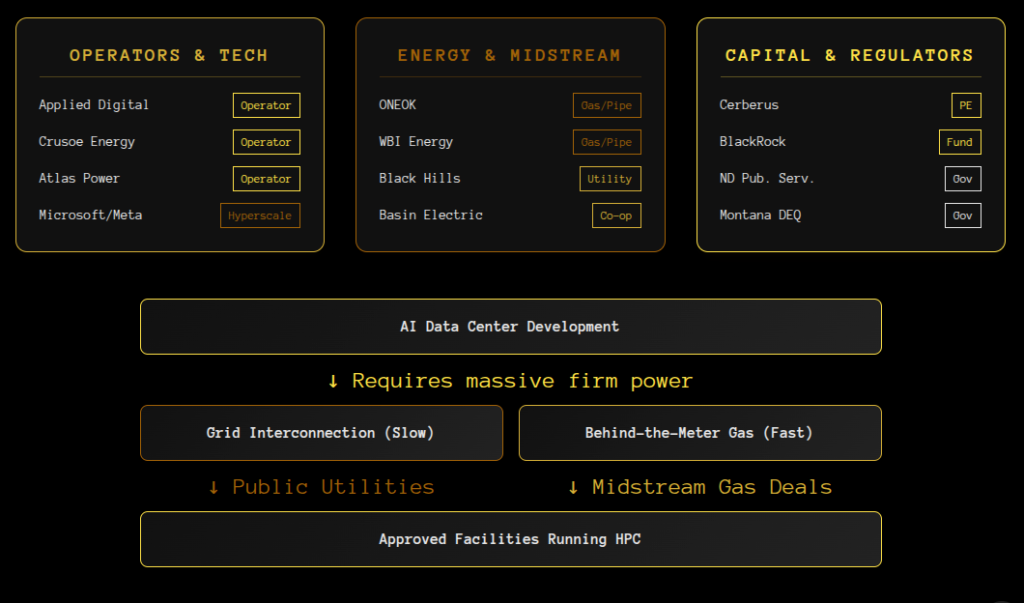
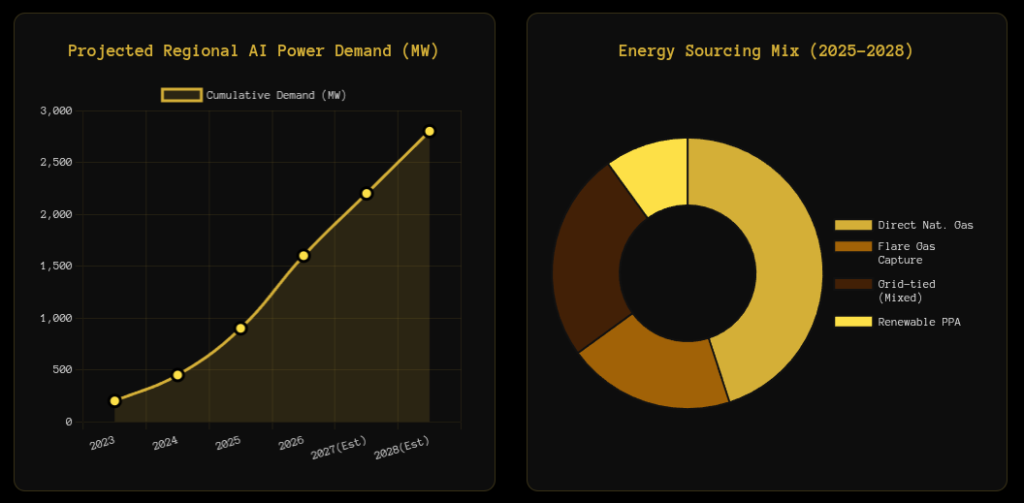
By examining major land acquisitions, the explosive growth of AI data centers, the multi-million-dollar energy grid upgrades, and the intricate web of campaign finance and lobbying that surrounds key regulators—specifically North Dakota Attorney General Drew Wrigley—a clear architecture of industrial influence emerges. The following sections deconstruct the chronological and financial intersections of these forces, beginning with the highly controversial acquisition of prime agricultural land by interests tied to billionaire Bill Gates, and culminating in the current legislative battles over data center deployment, grid sovereignty, and the future of the state’s natural resources.
The 2022 Farmland Purchase: Bill Gates, the Red River Trust, and Legal Scrutiny
The modern era of intense public and legal scrutiny over corporate land acquisitions in North Dakota was catalyzed in late 2021 and mid-2022 by a transaction involving one of the world’s wealthiest individuals and a massive swath of prime agricultural real estate. A legal entity known as the Red River Trust quietly acquired approximately 2,100 acres of prime, mostly non-irrigated farmland in the northern Red River Valley, spanning Pembina and Walsh counties near the Canadian border. The land was purchased from Thomas, William, and Gregory Campbell, operators of Campbell Farms, a prominent regional potato farming enterprise headquartered in Grafton, North Dakota. The transaction was valued at approximately $13.5 million, reflecting a rough average price of $6,400 per acre, with the Pembina County acreage commanding approximately $6,600 per acre and the Walsh County land calculating to roughly $6,000 per acre due to complex river boundaries.
The Mechanics of the 1932 Anti-Corporate Farming Law
The acquisition immediately triggered a political and public firestorm due to its potential violation of North Dakota’s strict 1932 Anti-Corporate Farming Law. Enacted during the Great Depression, the statute was explicitly designed to protect local family farms by prohibiting corporations and limited liability companies (LLCs) from owning or leasing farmland or ranchland, thereby preventing wealthy out-of-state entities, corporate conglomerates, and banks from monopolizing the state’s foundational agricultural base. The law requires county recorders to immediately notify the state’s attorney general if a title conveys ownership of farmland to a corporate entity, placing the burden of enforcement squarely on the state’s highest legal officer.
When the identity of the trust’s ultimate beneficiary—Bill Gates, acting through trustee Peter Headley and the Lenexa, Kansas-based Red River Trust—was revealed, residents and local officials expressed profound concern regarding the concentration of land wealth. North Dakota Agriculture Commissioner Doug Goehring publicly noted that while selling land to a billionaire is not inherently illegal, citizens felt exploited by ultra-wealthy out-of-state investors who did not share the region’s values, economic realities, or commitment to local agrarian communities. Gates was already known as the largest private owner of farmland in the United States, possessing roughly 270,000 acres across dozens of states, making his entry into North Dakota a highly scrutinized event. The transaction prompted an official legal review by the North Dakota Attorney General’s Office, overseen by newly appointed Attorney General Drew Wrigley, to determine if the trust structure violated the state’s corporate farming prohibitions.
Attorney General Drew Wrigley’s Legal Clearance and Public Backlash
On June 21, 2022, the Attorney General’s Corporate Farming Enforcement Division, via a letter drafted by paralegal Kerrie Helm, sent a formal inquiry to the Red River Trust and its trustee, Peter Headley. The letter demanded confirmation of how the newly acquired land would be utilized and whether it met any of the strict statutory exceptions under North Dakota law. The legal stakes were significant: under the statute, a corporation found in violation has up to a year to divest the property or face severe financial penalties of up to $100,000.
Just days later, on June 29, 2022, Attorney General Wrigley issued a formal letter clearing the transaction and ending the investigation. The legal justification provided by the state hinged on a specific statutory exemption: the business purpose exception. Wrigley’s office determined that because the Red River Trust was leasing the 2,100 acres back to the Campbell family for active, traditional farming operations, the transaction did not violate the 1932 law. Wrigley stated that such inquiries are issued as a “matter of course” when his office is notified of large farmland sales, framing the rapid clearance as standard administrative procedure.
While the ruling was declared legally sound according to the letter of the law, prominent legal critics and agrarian advocates argued that the review was rushed and lacked rigorous due diligence. Former North Dakota Attorney General Sarah Vogel, a long-time champion of the anti-corporate farming statute who co-authored a 2016 essay with Willie Nelson defending the law, publicly criticized Wrigley’s office. Vogel noted that basic due diligence should have required a thorough examination of the actual, unredacted trust documents to verify the sole beneficiaries and ensure no corporate entity was hiding behind the trust structure, rather than relying on rapid correspondence with the trust’s legal representatives. Vogel’s investigation revealed that as late as August 2022, there was no record indicating that the Attorney General’s office had ever seen or obtained a copy of the actual Red River Trust document.
The swift clearance of the $13.5 million Gates transaction set a crucial precedent, signaling to global capital that North Dakota’s regulatory environment was highly amenable to sophisticated corporate investment structures, provided the correct legal loopholes and leasing frameworks were utilized. This clearance served as the opening salvo for a much larger wave of corporate land acquisitions that would soon follow, not for farming, but for the deployment of massive digital infrastructure.
Campaign Finance and the RAGA Network
To fully understand the rapid expansion of digital and corporate infrastructure in North Dakota, one must analyze the financial architecture surrounding the state’s regulatory bodies. The technology and energy sectors have deployed a sophisticated, highly capitalized political funding apparatus designed to capture the administrative state, specifically targeting entities with ultimate legal authority over land use, corporate structures, and utility regulations. The most explicit metric of this industry regulatory capture can be observed in the campaign finance disclosures of North Dakota Attorney General Drew Wrigley. As the state’s top law enforcement official, Wrigley holds unilateral authority to interpret corporate farming laws, clear massive land acquisitions, and intervene in utility and environmental litigation.
An exhaustive analysis of Wrigley’s campaign finance records reveals a stark chronological evolution in his donor base, directly mirroring the infrastructural timeline of the state.
The 2022 Cycle: The Gates Clearance and Network Periphery
During the 2022 election cycle—the exact period in which Wrigley’s office reviewed and legally cleared the highly controversial Bill Gates farmland purchase—Wrigley did not receive direct campaign contributions from Bill Gates personally, nor from Microsoft’s corporate PACs. The immediate financial connection between the regulator and the regulated entity was structurally insulated.
However, forensic analysis of itemized contributions greater than $200 reveals distinct financial connections to the broader Microsoft and Gates-adjacent ecosystem, as well as pharmaceutical interests heavily tied to Gates’ philanthropic network. In August 2022, merely weeks after the Red River Trust clearance was finalized, Wrigley received a $300 contribution from Rachael Beitler, a corporate affairs operative embedded within the Microsoft-adjacent executive network.
Furthermore, in September 2022, Wrigley received a $1,000 contribution from the PAC of Pfizer Inc., a pharmaceutical giant that historically represents one of the top corporate equity holdings within the Bill & Melinda Gates Foundation’s investment portfolio. The Gates Foundation leverages massive global health initiatives alongside traditional corporate lobbying arms, and Pfizer has long been a primary beneficiary of this ecosystem.
This connection is further contextualized by Wrigley’s involvement with the Republican Attorneys General Association (RAGA). RAGA functions as a highly capitalized network that funnels corporate money into state Attorney General races to promote deregulation and corporate-friendly legal environments. During the second quarter of 2022, RAGA raised $4.9 million, heavily funded by corporate entities including a $100,560 donation from Pfizer, $100,000 from Altria Client Services, and $150,000 from the BNSF Railway Company. Wrigley serves as an active member of RAGA, seamlessly integrating him into a national network of corporate influence where entities like Pfizer and BNSF (a company deeply invested in North Dakota’s energy logistics) provide the foundational capital for political survival. While circumstantial, the timing of these periphery donations demonstrates an early alignment between the state’s regulatory apparatus and the broader corporate ecosystem pushing into North Dakota.
The 2026 Cycle: Direct Hyperscale and Energy Funding
By the 2026 election cycle, the data center boom had transitioned from theoretical planning to multi-billion-dollar physical construction. Correspondingly, the financial ties between state regulators and the data center and energy industries became overt, highly concentrated, and undeniably direct.
During the pre-primary reporting period of January 1, 2026, to April 30, 2026, Attorney General Wrigley’s campaign committee raised a total of $52,325.00. An extraordinary 48% of the itemized early primary capital ($25,000) originated directly from target industries driving the data center expansion: Big Tech, energy conglomerates, and national tech-adjacent megadonors.
The following table provides a comprehensive structural breakdown of these targeted 2026 contributions to Attorney General Drew Wrigley, highlighting the strategic alignment of donor capital:
| Donor Entity | Sector / Industry Relevance | Contribution Date | Amount (USD) |
|---|---|---|---|
| Dr. Miriam Adelson | National Megadonor (Tech infrastructure and corporate deregulation advocate) | March 9, 2026 | $10,000.00 |
| Chevron Employees PAC | Energy Conglomerate (Baseload generation and pipeline infrastructure) | March 9, 2026 | $5,000.00 |
| NextEra PAC | Energy Provider (Clean energy grids and infrastructure for hyperscale servers) | March 15, 2026 | $4,000.00 |
| Microsoft Corp Stakeholders | Big Tech / AI Hyperscaler (Major data center operator and AI developer) | March 12, 2026 | $2,500.00 |
| Nelnet PAC | Digital Infrastructure (Fiber-optics telecommunications, large-scale solar) | April 3, 2026 | $2,500.00 |
| Energy Transfer PAC | Energy Infrastructure (Pipelines and power plant fuel supply) | April 9, 2026 | $1,000.00 |
| Total Target Sector Capital | $25,000.00 |
Data derived from the official 2026 Pre-Primary Campaign Finance Disclosure Statement.
This capital allocation represents a masterclass in targeted administrative influence. According to strategic mappings of North Dakota’s lobbying infrastructure, the primary influence vectors for the tech sector in 2026 are grid access and upgrades (holding a priority weight of 45) and zoning and land use (holding a priority weight of 30). The corporations supplying this campaign capital are the exact entities that require favorable rulings on these specific vectors. NextEra and Chevron require expedited permitting and favorable regulatory structures to expand power generation capabilities; Nelnet requires vast rights-of-way for fiber-optic deployments; and Microsoft requires frictionless zoning approvals and massive, uninterrupted power for its AI workloads. By heavily funding the chief legal officer of the state, the hyperscale ecosystem mitigates the risk of legal injunctions and antitrust enforcement that have successfully stalled developments in other, more heavily regulated states.
The Lobbying Vanguard: Institutionalizing Tech Influence
To complement this direct campaign financing, the technology and energy sectors have institutionalized their presence within the halls of the North Dakota legislature through a highly coordinated lobbying vanguard. At the legislative level, the industry is represented by powerful consortiums such as TechND and the newly formed Data Center Coalition of North Dakota.
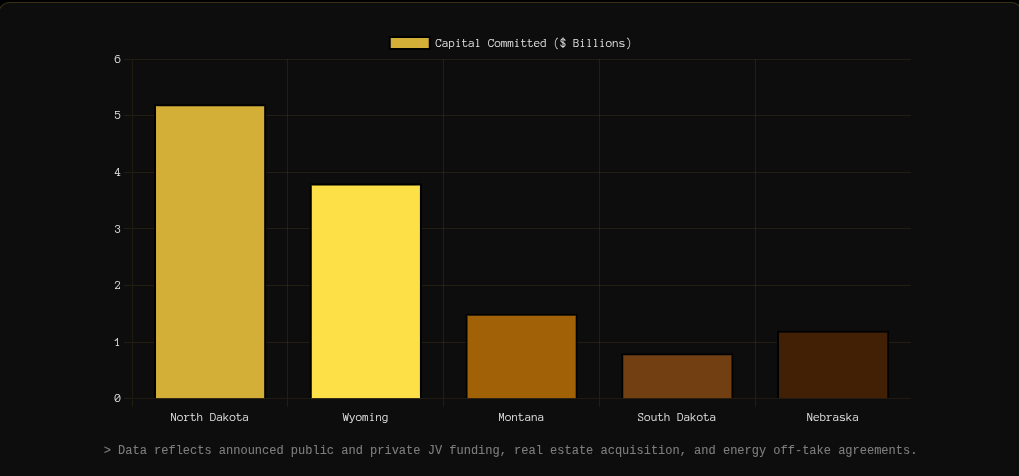
These organizations routinely sponsor lavish legislative events designed to build intimate relationships with state lawmakers and regulators outside of formal hearing rooms. For example, on March 24, 2025, TechND and the Data Center Coalition sponsored a “Technology & Tacos” event at the Luft Rooftop Beer Garden in Bismarck. Spearheaded by executive director Terry Effertz, the event targeted 100 public officials and 25 registered lobbyists, featuring a catered Qdoba taco bar at an estimated cost of $15 per attendee. The stated educational component of the event allowed TechND members to deliver speeches regarding technology bills moving through the legislative session and field specific questions from lawmakers, effectively providing the industry with a captive audience of regulators in a highly controlled, socially engineered environment.
The physical manifestation of this influence is carried out daily by elite state lobbyists. Records from the North Dakota Secretary of State identify operatives such as Kayla Effertz Kleven, who simultaneously lobbies on behalf of Applied Digital Inc., Apple Inc., Oracle America Inc., NextEra Energy Resources, and the BNSF Railway Company. By utilizing a consolidated lobbying force that represents both the hyperscale tech developers (Applied Digital, Apple, Oracle) and the traditional energy and transportation conglomerates required to fuel them (NextEra, BNSF), the industry presents a unified, monopolistic front to state legislators. This ensures that grid access requests, tax incentive legislation, and zoning variances are seamlessly synchronized across multiple sectors, effectively overwhelming the capacity of local lawmakers to critically assess the cumulative impact of these intertwined industries.
The Hyperscale Expansion: Data Center Developments and Construction
With the regulatory and lobbying frameworks firmly established, a massive and exponentially larger land and infrastructure acquisition phase began to take hold across the state. Driven by the explosive global demand for artificial intelligence training and inference workloads, data center developers recognized North Dakota’s untapped potential. The vanguard of this movement has been Applied Digital Corporation, a designer, builder, and operator of next-generation, high-performance computing digital infrastructure.
The economic and infrastructural scale of this expansion cannot be overstated. The total addressable market (TAM) for global data centers reached $285 billion in 2023, representing 12,000 MW of capacity. Projections indicate this market will explode to $650 billion and 35,000 MW by 2028, driven by a 15% compound annual growth rate. Training massive AI models requires staggering amounts of power; a 1-trillion parameter model requires an estimated 91 MW of demand, while a 10-trillion parameter model will demand upwards of 910 MW. Furthermore, the capital expenditure required to build AI-optimized facilities ranges from $8 million to $12 million per megawatt, significantly higher than the $4 million to $7 million required for traditional colocation centers.
The Applied Digital Footprint: From Blockchain to AI
Applied Digital initially established its presence in North Dakota with air-cooled facilities in Jamestown (ranging from 9 MW to 106 MW) and Ellendale (180 MW), which were primarily dedicated to blockchain and cryptocurrency mining operations. However, the economic calculus shifted rapidly with the advent of generative AI. Cryptocurrency mining relies on lower-density, air-cooled hardware, whereas hyperscale AI infrastructure requires high-density, liquid-cooled architecture capable of supporting massive GPU clusters, such as NVIDIA’s highly advanced Hopper and Blackwell systems.
To meet this new paradigm, Applied Digital spun off its traditional cloud compute business into ChronoScale Corporation (retaining 97% ownership), leaving the core company hyper-focused on long-duration AI hosting and infrastructure deployment. They launched an aggressive, multi-billion-dollar expansion strategy across several massive campuses:
- Polaris Forge 1 (Ellendale, ND): Originally a blockchain site, this campus is undergoing a massive retrofit and expansion to serve as a dedicated AI data center. The site currently features 100 MW of IT power capacity and is engineered with an expansion capacity up to an astonishing 1 GW (1,000 MW). Demonstrating their ability to tap deep institutional capital, Applied Digital recently secured a $300 million senior secured bridge facility, led by Goldman Sachs, specifically to fund the development of Building 3 at this campus.
- Polaris Forge 2 (Harwood/Fargo, ND): A planned multi-billion-dollar development located north of Fargo. This campus represents a critical node in Applied Digital’s portfolio, expected to utilize between 200 MW and 280 MW of critical IT load.
- Delta Forge 1: While not exclusively tied to North Dakota in all corporate filings (often described generically as a southern U.S. location), the architectural and operational blueprint for the massive 430 MW Delta Forge campus was refined entirely through the company’s North Dakota Polaris campuses. In early 2026, Applied Digital secured a monumental 15-year lease with a U.S.-based high-investment-grade hyperscaler for 300 MW of critical IT load at Delta Forge 1, representing $7.5 billion in total contracted value.
- Polaris Forge 3: Expanding its footprint further, Applied Digital recently announced a second 15-year lease with the exact same hyperscaler for the Polaris Forge 3 campus, adding another 300 MW of critical IT load supported by roughly 430 MW of grid-connected utility power. This second lease holds a base value of $7.5 billion, with a potential value of $18.2 billion if all renewal options are exercised by the client.
The sheer scale of these developments is unprecedented in the state’s economic history. Applied Digital now boasts a development pipeline of over 1.75 GW (1,750 MW) across multiple regions, with total contracted lease revenues exceeding $23 billion, effectively cementing their status as a dominant force in AI infrastructure.
The following table provides a breakdown of Applied Digital’s projected pipeline and capital metrics, illustrating the velocity of their expansion:
| Project Stage | MW Allocation | Estimated Commissioning | CapEx per MW |
|---|---|---|---|
| Built / Online | 150 MW | Currently Online | N/A |
| Under-Construction | 300 MW | 2024–2025 | $8M – $12M |
| Permitted | 500 MW | 2025–2026 | $8M – $12M |
| Proposed | 800 MW – 1,000 MW | 2026–2028 | $8M – $12M |
| Total Pipeline | 1,750 MW | 5-Year Horizon | Total Est. CapEx > $15 Billion |
Data derived from industry market reports and SEC filings regarding Applied Digital’s capacity pipeline.
Alternative and Sovereign Infrastructure: Bitzero and the MHA Nation
While Applied Digital dominates the traditional hyperscale market, other entities are executing highly unconventional and historically significant infrastructure developments across North Dakota.
Bitzero: Repurposing Cold War Relics
In July 2022, data center developer Bitzero Blockchain Inc. acquired the historic Stanley R. Mickelsen Safeguard Complex in Nekoma, North Dakota, from the Cavalier County Job Development Authority (CCJDA). Known locally as “The Pyramid,” the site was originally a U.S. Army anti-ballistic missile defense facility constructed in 1975 to house Spartan and Sprint missiles, built at a staggering original cost of $6 billion (adjusted for 2025 inflation).
Bitzero acquired the 184-acre property with plans to invest $500 million to convert the highly secure, blast-proof military installation into a state-of-the-art AI and high-performance computing data center. The site benefits from a diversified energy mix, including wind, natural gas, and grid sources, and currently operates a 2.5 MW facility with an additional 30 MW prepped for rapid deployment, scaling eventually up to a total potential capacity of 300 MW.
Bitzero’s overarching corporate strategy highlights a novel approach: combining cryptocurrency mining with AI hosting. Crypto rigs serve as an interruptible power buffer; the power dedicated to these rigs can be instantaneously redirected to hyperscale AI workloads during periods of grid stress or high demand, creating a highly resilient energy profile. This strategy is supported by massive international assets, including a 325 MW potential campus in Namsskogan, Norway, and a 1 GW potential campus in Kokemäki, Finland. To commercialize their capacity, Bitzero has partnered with commercial real estate giant CBRE and the Hydra Host platform to market these high-security, high-density AI capacities to sovereign and enterprise clients, recently purchasing 8 air-cooled NVIDIA Blackwell B300 servers (representing 64 total GPUs) to seed their AI-native customer base.
Tribal Energy Sovereignty: The MHA Nation
The hyperscale expansion is not limited to private corporate land; tribal nations are actively restructuring their economic futures around this technology. The Mandan, Hidatsa and Arikara (MHA) Nation, located on the Fort Berthold Reservation, is aggressively seeking to leverage its vast natural gas resources to attract data center development.
MHA Nation Chairman Mark Fox has emphasized that the reservation possesses excess power, water access, natural cooling advantages, and—crucially—jurisdictional sovereignty over its own regulations, making it an ideal location for hyperscale campuses free from the zoning friction found in state municipalities. By vertically integrating natural gas extraction with on-site data center power generation, regional actors are attempting to bypass the heavily constrained national transmission grids. The MHA Nation’s ambitions extend beyond mere data hosting; they are integrating this energy strategy with plans to export liquefied natural gas (LNG) globally and utilizing excess heat to power a massive agricultural greenhouse, combining energy, data, and food security into a single sovereign economic model. Existing operational sites in the region, such as the 200 MW Atlas Power Data Center near Williston, demonstrate the viability of deploying massive compute power directly adjacent to the Bakken oil and gas fields.
Energy Grid Strain, Upgrades, and the Nuclear Alternative
The deployment of gigawatt-scale data centers places an immense, highly concentrated strain on regional electrical grids. To contextualize the staggering power demands: a typical large-scale dairy operation in North Dakota, such as the massive 12,500-cow Abercrombie Dairy operated by Riverview in Richland County, requires between 2 and 2.5 MW of power. In stark contrast, a single Applied Digital campus, such as Polaris Forge 2, demands up to 280 MW—over 100 times the power requirement of a massive industrial agricultural facility.
The Agassiz Transmission Line and Minnkota Power Cooperative
Integrating these colossal electrical loads requires hundreds of millions of dollars in localized grid upgrades. The central friction point in modern infrastructure development is determining who ultimately bears the capital expenditure for these upgrades—the multi-billion-dollar hyperscaler, the local utility cooperative, or the residential ratepayer.
In eastern North Dakota, the proposed Polaris Forge 2 data center in Harwood necessitates the construction of a massive new electrical substation and a high-voltage 345-kilovolt powerline. To facilitate this and avoid regulatory delays, Applied Digital committed $75 million to fully fund the construction of the Agassiz Transmission Line and Substation. The infrastructure will be built on property already owned by the utility and will be owned and operated by the Minnkota Power Cooperative, which will provide wholesale electricity to the Cass County Electric Cooperative, the direct retailer to the data center.
Paul Matthys, president and CEO of the Cass County Electric Cooperative, noted that the addition of the Applied Digital data center would essentially double the peak demand for power across the entire co-op. Minnkota Power Cooperative representatives have publicly stated that Applied Digital’s private funding of the Agassiz project provides a tremendous benefit to the southern Red River Valley grid, absorbing infrastructure costs that would otherwise eventually fall upon homes, farms, schools, and local businesses.
However, the broader macroeconomic reality is that North Dakota’s electric rates—historically among the lowest in the United States—are facing severe upward pressure. As utilities engage in long-term capacity planning to satisfy the voracious, 24/7 appetite of AI data centers, the necessity for new baseload generation (often requiring the prolonged lifespan of coal plants or the construction of new natural gas turbines) fundamentally alters the state’s energy economics. The rapid integration of these facilities ensures that the state’s energy output is increasingly consumed by algorithms rather than industrial or residential growth.
The National Alternative: Advanced Nuclear SMRs
The grid strain in North Dakota mirrors a national crisis in power availability for the AI sector. Recognizing that traditional renewable sources, such as wind and solar, suffer from intermittency and inherently lack the 24/7 reliability required by hyperscalers, the global tech industry is aggressively pivoting toward nuclear power.
Competitors in the space are executing massive nuclear agreements. Google recently partnered with Kairos Power to construct 500 MW of advanced nuclear reactors to meet its carbon-neutral goals while powering AI data centers. Similarly, Amazon Web Services (AWS) partnered with Dominion Energy and Energy Northwest to deploy Small Modular Reactors (SMRs) in Virginia and Washington, while Meta is actively seeking nuclear energy partnerships to supply its facilities.
North Dakota is actively tracking this macro trend to remain competitive. The state legislature recently filed Draft Bill 429, which would appropriate $500,000 from the state’s general fund to explicitly study the feasibility of siting and deploying advanced nuclear reactors within the state. The funds would allow the state to hire outside experts to report on how to proceed with nuclear integration, signaling a potential shift away from legacy coal. Until SMR technology matures and clears regulatory hurdles, however, North Dakota’s legacy coal and gas infrastructure remains the primary, immediate lure for hyperscalers seeking uninterruptible power today.
The Backlash: Moratoriums, NDAs, and Democratic Deficits
The sheer velocity of the data center expansion has drastically outpaced the regulatory frameworks and comprehensive planning capabilities of local municipalities, leading to widespread civic anxiety, public outrage, and legislative pushback. Communities across North Dakota and the broader United States are increasingly viewing hyperscale data centers not as economic saviors or job creators, but as parasitic entities that consume vast quantities of local water and electricity while providing relatively few long-term employment opportunities relative to their massive footprint.
Confidentiality and the Erosion of Oversight
A primary catalyst for public distrust has been the pervasive and opaque use of Non-Disclosure Agreements (NDAs) by data center developers during the critical site selection and zoning phases. In the case of the highly controversial Harwood/Fargo development, both Harwood Mayor Hankey and Fargo Mayor Tim Mahoney signed binding NDAs with Applied Digital.
While developers argue that NDAs are standard corporate practices designed to protect proprietary site-selection algorithms, land negotiation strategies, and trade secrets from competitors, local residents view them as mechanisms to bypass democratic oversight. By legally barring mayors and city planners from disclosing water consumption metrics, electrical draw parameters, and tax abatement structures, the public is deprived of the ability to rationally assess the project’s true environmental and infrastructural costs until the deals are practically finalized and ground is broken.
County-Level Moratoriums and Legislative Pauses
In direct response to the rapid influx of zoning applications, the opacity of NDAs, and the lack of comprehensive state-level regulations, several North Dakota counties have utilized their localized zoning authority to forcibly halt development.
- Mercer County: On March 3, 2026, following over an hour of heated public testimony and debate, the Mercer County Commission narrowly approved a one-year moratorium on all data center applications. Commissioner Jamee Folk championed the motion, which halts any activity relating to data center projects to give the county time to understand the implications of massive water and power withdrawals on local agriculture and residential infrastructure.
- Barnes County: Similarly, the Barnes County Commission voted to enact a six-month moratorium to establish baseline guidelines before any interested companies could approach local entities. Barnes County Emergency Manager Jessica Jenrich noted that during board meetings, residents expressed deep, vocal concerns regarding environmental degradation, water usage, impending electricity rate hikes, and the specific use of NDAs by developers.
The Push for State-Level Regulation
The regulatory vacuum has elevated data center policy from a localized zoning issue to a top-tier political debate in the 2026 state elections. Chris Olson, a Republican candidate challenging incumbent Jill Kringstad for a seat on the North Dakota Public Service Commission (PSC), recently called for a statewide moratorium on all data center development until after the 2027 legislative session has an opportunity to weigh in.
Olson articulated a growing consensus among conservative populists, agricultural defenders, and environmentalists alike: the global hyperscale industry is moving much faster than the state’s capacity to regulate it safely. Currently, the North Dakota PSC does not explicitly regulate data centers, leaving a critical jurisdictional gap regarding who holds authority over these massive load users. Without a unified state policy, counties are left to fend for themselves against multi-billion-dollar corporate legal teams, resulting in a fractured and highly volatile regulatory landscape.
The aggressive expansion of artificial intelligence data centers in North Dakota is not merely a regional economic development story; it serves as a macro-level blueprint for how global technology and energy conglomerates successfully capture, reshape, and dominate the physical and regulatory landscape of a state to serve their specific infrastructural imperatives.
Through the highly scrutinized acquisition of legacy agricultural land via insulated trust structures—as demonstrated by the Bill Gates-backed Red River Trust—the rapid deployment of gigawatt-scale liquid-cooled server campuses by entities like Applied Digital, and the absorption of localized grid infrastructure upgrades, the hyperscale industry has secured the physical resources necessary to maintain absolute dominance in the global AI arms race. Furthermore, the repurposing of historical military assets like the Nekoma Pyramid by Bitzero highlights a profound historical shift: the state is transitioning from a fortress of national military defense and food security into a decentralized, privatized node for global digital computation.
Crucially, this unprecedented physical expansion is underwritten by a highly sophisticated, well-funded architecture of political influence. By deploying elite lobbyists to navigate legislative hurdles and directing concentrated, targeted campaign capital into the war chests of key regulatory officials, such as Attorney General Drew Wrigley, the industry ensures a frictionless legal environment. The financial records of 2026 clearly map a regulatory apparatus that is heavily subsidized by the exact energy, tech, and telecommunications entities it is tasked with overseeing, creating a feedback loop where capital secures regulatory clearance, which in turn secures further capital deployment.
As hyperscalers continue to execute multi-billion-dollar leases and demand unprecedented volumes of baseload power and water, the inherent tension between global tech capital and local civic sovereignty will undoubtedly escalate. With county commissions enacting moratoriums in a desperate bid to reclaim oversight, North Dakota stands at the vanguard of this conflict, serving as the ultimate modern case study in the intersection of artificial intelligence, physical resource extraction, and the mechanics of regulatory capture.
References
- Applied Digital to Break Ground on $3 Billion Polaris Forge 2 Campus in September 2025, Expanding North Dakota’s Role as a National AI Infrastructure Leader,https://ir.applieddigital.com/news-events/press-releases/detail/127/applied-digital-to-break-ground-on-3-billion-polaris-forge
- Applied Digital Breaks Ground on Delta Forge 1, a 430 MW AI Factory Campus in a Southern U.S. State, https://ir.applieddigital.com/news-events/press-releases/detail/144/applied-digital-breaks-ground-on-delta-forge-1-a-430-mw-ai
- News Reactor | December 2024 – National Conference of State Legislatures, https://www.ncsl.org/newsletter/details/news-reactor-december-2024
- Data center developer looks west, backs power upgrades near Fargo, https://www.newsfromthestates.com/article/data-center-developer-looks-west-backs-power-upgrades-near-fargo
- Shark Tank’s Kevin O’Leary on Bitzero, data centers, and the AI revolution,https://bebeez.eu/2026/03/12/shark-tanks-kevin-oleary-on-bitzero-data-centers-and-the-ai-revolution/
Data center battles started in the states. Now it’s Congress under siege.,https://www.newsfromthestates.com/article/data-center-battles-started-states-now-its-congress-under-siege - Bill Gates Triggers North Dakota Outrage With 2,100-Acre Farmland Buy – Benzinga,https://www.benzinga.com/news/22/11/29693277/bill-gates-triggers-north-dakota-outrage-with-2-100-acre-farmland-buy
- North Dakota Attorney General’s Office looks into Bill Gates-related farmland sale, https://www.farmlandgrab.org/post/31025-north-dakota-attorney-general-s-office-looks-into-bill-gates-related-farmland-sale
- North Dakota OKs Bill Gate’s Farmland Purchase – Pro Farmer https://www.profarmer.com/news/agriculture-news/north-dakota-oks-bill-gates-farmland-purchase
- Bill Gates approved for large North Dakota farmland purchase – Farms.com, https://m.farms.com/ag-industry-news/bill-gates-approved-for-large-north-dakota-farmland-purchase-864.aspx
- North Dakota farmland purchase tied to Gates stirs emotion – MPR Newshttps://www.mprnews.org/story/2022/06/23/north-dakota-farmland-purchase-tied-to-gates-stirs-emotion
- MONTANA DEPARTMENT OF JUSTICE INVESTIGATIVE REPORT CASE NO: MC 221207 DATE: May 25, 2023 AGENT: Don Guiberson INVESTIGATIV – North Dakota Legislative Branchhttps://ndlegis.gov/sites/default/files/committees/68-2023/25.5073.02000_1300_montanareport.pdf
- Bill Gates’ North Dakota Land Purchase Sparks Questions Online – Newsweek https://www.newsweek.com/bill-gates-north-dakota-land-purchase-sparks-questions-online-1722660
- The Soul of North Dakota: Again At Risk? – Sarah Vogel, accessed May 23, 2026, https://sarahmvogel.com/soul-north-dakota-at-risk/
- rule_of_law_index_2019 – PubHTML5 https://pubhtml5.com/shlu/tcmv/basic/151-200
Comprehensive Annual Financial Report – rio@nd.gov, accessedhttps://www.rio.nd.gov/sites/www/files/documents/PDFs/RIO/Reports/annualreport2015.pdf - Republican Attorneys General Association – SourceWatchhttps://www.sourcewatch.org/index.php/Republican_Attorneys_General_Association
- Republican AG Pay-to-Play Group Raises $4.9 Million in Second Quarter, https://www.exposedbycmd.org/2022/07/19/republican-ag-pay-to-play-group-raises-4-9-million-in-second-quarter/
- Meeting Notice Submissions – North Dakota Ethics Commission, https://www.ethicscommission.nd.gov/meeting-notice-results
- Meeting Notice > Content: Submission #55 | Ethics Commission, North Dakota, https://www.ethicscommission.nd.gov/webform/meeting_notice/submissions/93
- House of Rep Daily Journal – Date 05-17-2025 Day 0 – North Dakota Legislative Branch, https://ndlegis.gov/assembly/69-2025/regular/journals/hp-dailyjnl-00.pdf
- Registered Lobbyists: 2020 – 2021 – FirstStop https://firststop.sos.nd.gov/lists/lobbyist?year=2020
- North Dakota Secretary of State, accessed May 23, 2026, https://firststop.sos.nd.gov/api/list/csv/2018
Applied Digital (APLD) secures $7.5B, 15-year hyperscaler AI lease and tops $23B backlog,https://www.stocktitan.net/sec-filings/APLD/8-k-applied-digital-corp-reports-material-event-6cbaf835ae7c.html - Applied Digital secures $7.5B hyperscaler lease for 300MW facility – Investing.com Canada,https://ca.investing.com/news/stock-market-news/applied-digital-secures-75b-hyperscaler-lease-for-300mw-facility-93CH-4652079
- Applied Digital Datacenter & AI Infrastructure Industry Analysis 2025: Market, Power, Finance, and Strategic Outlook – Sparkco, https://sparkco.ai/blog/applied-digital
Presentation – Applied Digital Corporation,https://ir.applieddigital.com/_assets/_2b270afc37018352de7ef24c16a6e485/appliedblockchaininc/db/2905/27266/pdf/APLD_INV_InvestorPresentation_Final_04.24.26.pdf - APLD Stock Extends Run As Hyperscale AI Leases Pile Up https://www.timothysykes.com/news/applied-digital-corp-apld-news-2026_05_21/
- Applied Digital ELN02 Data Center in Ellendale (100 MW) https://www.datacentermap.com/usa/north-dakota/ellendale/applied-digital-eln02/
- Applied Digital surpasses 1GW, agrees lease on Polaris Forge 3, https://capacityglobal.com/news/applied-digital-surpasses-1gw-agrees-lease-on-polaris-forge-3/
- Stanley R. Mickelsen Safeguard Complex – Wikipedia, https://en.wikipedia.org/wiki/Stanley_R._Mickelsen_Safeguard_Complex
Investor presentation – Bitzero https://bitzero.com/wp-content/uploads/2026/01/BITZERO_INVESTOR_PRESENTATION_January-2027.pdf - MHA Nation charts path to self-sufficiency by leveraging natural gas, data centers – KFGO https://kfgo.com/2026/05/21/1308904/
- Burgum, Sanford reflect on progress and challenges during administration’s sixth year | North Dakota Office of the Governor https://www.governor.nd.gov/news/burgum-sanford-reflect-progress-and-challenges-during-administrations-sixth-year
- North Dakota Prepares for Data Centers to Come Online – GovTech, accessed May 23, 2026, https://www.govtech.com/computing/north-dakota-prepares-for-data-centers-to-come-online
- May 8, 2026 Newsletter – WDEA – Western Dakota Energy Associationhttps://www.ndenergy.org/Newsletter/Full-Moon-Rising/Federal-Funding-Advances-Bakken-EOR-Effort
2024 Financial Review – EEI.org, https://www.eei.org/-/media/Project/EEI/Documents/Issues-and-Policy/Finance-And-Tax/Financial_Review/FinancialReview_2024.pdf - PSC Candidate Calls for Statewide Data Center Moratorium – KNOX Radio’s,https://knoxradio.com/2026/05/20/psc-candidate-calls-for-statewide-data-center-moratorium/
- Barnes County Emergency Manger Addresses Data Center Concerns,https://www.newsdakota.com/2026/05/21/barnes-county-emergency-manger-address-data-center-concerns/
- Proposed AI data center sparks debate near Fargo – MPR News, https://www.mprnews.org/story/2025/09/03/proposed-ai-data-center-sparks-debate-in-fargomoorhead-area
- Split commission approves one-year data center moratorium – Central Nordak Publishing, https://www.centralnordak.com/articles/split-commission-approves-one-year-data-center-moratorium/
Human Trafficking, Dancing Boys, National Security and North Dakota: Cerberus Capital Managament, DynCorp, and the Public-Private Partnerships Rewarding Traffickers
[STEPHEN FEINBERG]
- Co-Founder/Co-CEO/CIO: Cerberus Capital Management ($65B AUM)
- Chairman: President’s Intelligence Advisory Board (PIAB, 2017-2020)
- Deputy Secretary of Defense (confirmed March 2025, 59-40 vote)
- Controls: DoD budget implementation, Pentagon operations
- Owns: DynCorp International (private military contractor, acquired 2010 for $1B)
- Owns: Tier 1 Group (private SEAL/Special Ops training facility, Memphis)
- Receives: After-action reports from Special Operations missions
- Political: Trump mega-donor, controls defense spending
- Associated with detained CIA employee David Rush. Rush was caught with $40 million of gold bars in his home.
[CERBERUS CAPITAL MANAGEMENT]
- AUM: $65 billion
- Clients: ND State Investment Board ($200M+ direct lending)
- Portfolio: DynCorp, Remington, Albertsons
- Lobbying: $2.3M (2021), $1.2M+ political contributions (2022)
- Strategy: Distressed assets, defense contracting, leveraged buyouts
[DYNCORP INTERNATIONAL]
- Acquired by Cerberus: 2010 ($1 billion)
- Function: Private military contractor
- Operations: Afghanistan police training, air support, security
- CRIMES (Wikileaks/DOJ confirmed):
- Bosnia (1999): Sex-slave trade, trafficking women/girls
- Afghanistan (2009): “Dancing boys” (bacha bazi) party for police
- Afghanistan: Drug supply to police recruits
- 2005: BLOCKED Pentagon attempt to ban contractor human trafficking
[RAY HOLMBERG — CONVICTED PEDOPHILE SENATOR]
- Served: 45 years in ND Legislature (Republican, Grand Forks)
- Resigned: 2022; Convicted: 2025; Sentenced: 10 years federal
- Alias: “Sean Evans” at Prague brothel
- Donors have included Microsoft
================================================================================
+-----------------------------------------------------------------------------------+
|                            CERBERUS CAPITAL MANAGEMENT                            |
|                  Founded 1992 | ~$65B AUM | Private Equity                        |
|                                                                                   |
|   +-----------------------+   +-----------------------+   +-------------------+   |
|   |   STEPHEN FEINBERG    |   |      M1 SUPPORT       |   |      DYNCORP      |   |
|   |    Co-founder/CEO     |-->|       SERVICES        |<--|   INTERNATIONAL   |   |
|   | Deputy SecDef (2026)  |   | Aviation/MRO/Training |   |    (Sold 2020)    |   |
|   |  Controls DoD budget  |   | "A Cerberus Company"  |   |  (Former portco)  |   |
|   +-----------------------+   +-----------------------+   +-------------------+   |
|               |                           |                                       |
|               |                           v                                       |
|               |             +---------------------------+                         |
|               |             | UND AEROSPACE FOUNDATION  |                         |
|               |             |   Joined Team M1 (2026)   |                         |
|               |             |    Flight School Next     |                         |
|               |             +---------------------------+                         |
|               |                           |                                       |
|               v                           v                                       |
|   +-----------------------+   +-----------------------+                           |
|   |    JEFFREY EPSTEIN    |   |     GEORGE KRIVO      |                           |
|   |  Appears in Feinberg  |   |  Chairman/CEO of M1   |                           |
|   |   files (NBC 2026)    |   |     Former CEO of     |                           |
|   |     POGO tracking     |   |     DynCorp Int'l     |                           |
|   |      connection       |   |   (Cerberus portco)   |                           |
|   +-----------------------+   +-----------------------+                           |
+-----------------------------------------------------------------------------------+
================================================================================
Cerberus Capital network mapping
| ENTITY | ROLE | KEY CONNECTIONS | DOCUMENTED EVIDENCE |
|---|---|---|---|
| Cerberus Capital Management | Private equity firm; ~$65B AUM | Owns M1 (May 2024); formerly owned DynCorp (2010-2020); Sparton (sold to Elbit 2021); Stratolaunch; Calspan hypersonics | Cerberus press release 5/28/2024: "acquired controlling interest in M1" |
| Stephen Feinberg | Co-founder/CEO of Cerberus; Deputy Secretary of Defense (2026) | Controls Pentagon budget while Cerberus profits from defense contracts; appears in Epstein files; Warren demanded recusal | Senate confirmation vote 59-40; Warren letter 4/26/2026; NBC News Epstein files report |
| M1 Support Services | Aviation MRO, training, logistics for U.S. military | Subsidiary of Cerberus; contracts with Army (Flight School Next, Fort Rucker); partnered with UND Aerospace Foundation | M1 website: "a Cerberus Capital Management company"; M1 press release 3/10/2026 (Drew appointment) |
| UND Aerospace Foundation | Not-for-profit support arm of UND Odegard School of Aerospace Sciences | Joined Team M1 for Army Flight School Next (2026); operates 150-aircraft fleet; trains military pilots | M1 press release: "UND Aerospace Foundation Joins Team M1's Flight School First" |
| DynCorp International | Defense contractor (training, logistics, aviation) | Former Cerberus portfolio company (2010-2020); sold to Amentum; George Krivo was CEO of DynCorp before becoming CEO of M1 | Cerberus acquired DynCorp for $1.5B in 2010; sold 2020 |
| George Krivo | Chairman/CEO of M1 | CEO of DynCorp International (Cerberus portfolio) before becoming CEO of M1; long-time aerospace/defense executive | M1 press release 5/28/2024: "George Krivo… has spent nearly 20 years as a senior executive across aerospace and defense services companies, including as CEO and COO of DynCorp International" |
| Jeffrey Epstein | Deceased financier, convicted sex offender | Appears in Feinberg/Cerberus-related files; connections to multiple Trump administration officials documented in 2026 Epstein file releases | NBC News 2026: "At least half a dozen top Trump administration officials appear in Epstein files"; POGO investigation tracking Feinberg-Epstein connections |
| Sen. Elizabeth Warren | U.S. Senator | Demanded Feinberg recuse from Cerberus-related decisions; noted he retains financial ties despite "divestment" paperwork | Warren letter to Feinberg, April 26, 2026 |
================================================================================
THE MONEY FLOW
                    U.S. ARMY FLIGHT SCHOOL NEXT PROGRAM
============================================================================

                                     |
                                     v
                           [M1 SUPPORT SERVICES]
                    (Prime Contractor, Cerberus-owned)
                                     |
                                     +---> Robinson Helicopter (aircraft)
                                     |
                                     +---> General Dynamics IT (simulation)
                                     |
                                     +---> Quantum Helicopters (training)
                                     |
                                     +---> UND Aerospace Foundation
                                           (academic/expertise)
                                     |
                                     v
                        CERBERUS CAPITAL MANAGEMENT
                             (profits from M1)
                                     |
                                     v
                             STEPHEN FEINBERG
                       (co-founder, Deputy SecDef)
                                     ^
                                     |
                    -----------------------------------
                     Feinberg controls Pentagon budget
                     that funds Flight School Next that
                      pays M1 that pays Cerberus that
                             enriches Feinberg
                    -----------------------------------
================================================================================
DYNCORP — THE CERBERUS DEFENSE AVIATION PREDECESSOR
--- ACQUISITION AND OWNERSHIP ---
Cerberus Capital Management acquired DynCorp International on April 12, 2010, for approximately $1 billion ($17.55/share). The deal closed July 7, 2010. DynCorp was a publicly traded private military contractor providing aviation, logistics, training, intelligence, and operational solutions in over 30 countries.
Cerberus owned DynCorp for TEN YEARS (2010-2020), during which the company was repeatedly embroiled in documented criminal and ethical scandals. On November 23, 2020, Amentum acquired DynCorp from Cerberus. The sale followed documented trafficking lawsuits and federal investigations.
--- GEORGE KRIVO: THE EXECUTIVE THREAD ---
George Krivo was CEO of DynCorp International during Cerberus' ownership. In an October 2018 Defense News interview, Krivo confirmed:
- DynCorp was one of 60 companies Cerberus owned
- Feinberg was NOT on DynCorp's board but was "a real patriot"
- DynCorp was "getting to the end of its lifetime" in the
Cerberus fund, making sale a "normal" private equity exit - The company was actively pursuing M&A to grow from $2B to
$3-4B in annual revenue
After Cerberus sold DynCorp to Amentum in 2020, Krivo became Chairman and CEO of M1 Support Services — ANOTHER Cerberus aviation/defense portfolio company. When Cerberus acquired M1 in May 2024, Krivo was already running it. The Cerberus press release explicitly states Krivo "has spent nearly 20 years as a senior executive across aerospace and defense services companies, including as CEO and COO of DynCorp
International."
Krivo is the connects Cerberus' two major defense aviation plays: DynCorp (2010-2020) and M1 (2024-present).
--- DOCUMENTED CRIMES DURING CERBERUS OWNERSHIP ---
The following incidents occurred WHILE Cerberus owned DynCorp:
BOSNIA (1999-2000) — SEX TRAFFICKING OF MINORS:
- DynCorp contractors engaged in trafficking of women and girls
in Bosnia and Herzegovina Whistleblowers Ben Johnston (DynCorp mechanic) and Kathryn
Bolkovac (UN monitor) independently reported DynCorp
employees having sex with minors and selling them as slaves - Johnston was fired and placed in protective custody
- Bolkovac was fired; later won unfair dismissal lawsuit in UK
- DynCorp fired five employees for similar illegal activities
- As of 2014, NO ONE had been prosecuted
AFGHANISTAN (2009) — BACHA BAZI ("DANCING BOYS"):
- DynCorp contractors paid a 15-year-old Afghan Bacha Bazi performer to perform lap dances and entertain them in Kunduz
- Several Afghans were arrested and investigated
- Wikileaks cable revealed Afghan Interior Minister Hanif Atmar asked U.S. ambassador to "quash" both the story and release of video from the incident
- DynCorp fired four senior managers and established a "chief compliance officer" position
- As first reported by the British Guardian newspaper, on June 24, 2009 the U.S. embassy in Afghanistan sent a cable to Washington, under the signature of Karl Eikenberry, U.S. ambassador to Afghanistan, regarding a meeting between Assistant Chief of Mission Joseph Mussomeli and Afghan Minister of Interior Hanif Atmar. Among the issues discussed was what diplomats delicately called the “Kunduz DynCorp Problem.” Kunduz is a northern province of Afghanistan In a May 2009 meeting interior minister Hanif Atmar expresses deep concerns that if lives could be in danger if news leaked that foreign police trainers working for US commercial contractor DynCorp hired “dancing boys” to perform for them. Young boys are bought and sold, dressed up like women and forced to dance, at men only parties. Many times they are then raped or killed. Bacha Bazi translated from Persian means "play boy."
IRAQ (2007-2012) — FRAUD AND MISMANAGEMENT:
- SIGIR found DynCorp "seemed to act almost independently of its reporting officers at the Department of State, billing the United States for millions of dollars of work that were not authorized"
- $1.3 billion spent on Iraqi police training program; auditors unable to determine how money was spent
- DynCorp built an unapproved Olympic-sized swimming pool at the behest of Iraqi police officials
- DynCorp agreed to pay $7.7 million to settle inflated construction claims (April 2011)
- DynCorp paid $1.5 million to settle civil fraud allegations involving kickbacks from Al-Qarat Company in Baghdad (2020)
005 — BLOCKED PENTAGON ANTI-TRAFFICKING RULE:
- DynCorp (and other contractors) successfully lobbied to BLOCK a Pentagon attempt to ban contractor involvement in human trafficking
- This occurred BEFORE Cerberus ownership but established the corporate culture that continued under Cerberus
--- FEINBERG'S ROLE WHILE CERBERUS OWNED DYNCORP ---
Stephen Feinberg was CEO of Cerberus throughout DynCorp's
entire tenure under Cerberus ownership (2010-2020). During
this period:
- DynCorp committed the documented crimes listed above
- Feinberg was reportedly seeking a role in Erik Prince's (Blackwater founder) vision to privatize the war in Afghanistan (Defense News, October 2018)
- Feinberg was appointed to Trump's intelligence advisory board (PIAB) while still Cerberus CEO and DynCorp owner
- Feinberg's appointment to PIAB was linked by media to rumors that DynCorp was up for sale
- Feinberg did NOT sit on DynCorp's board (per Krivo), but as Cerberus CEO he controlled the fund that owned DynCorp, set its strategy, approved its leadership, and ultimately decided when to sell it
--- THE KRIVO MIGRATION: DYNCORP -> M1 ---
The sale of DynCorp to Amentum in 2020 did not end Cerberus' interest in defense aviation. Instead, Cerberus simply migrated the executive talent:
GEORGE KRIVO:
- CEO of DynCorp International (201?-2020) — Cerberus-owned
- Chairman/CEO of M1 Support Services (2020-present) —
Cerberus acquired controlling interest May 2024
This means Krivo has run both of Cerberus' major defense aviation portfolio companies. The institutional knowledge, government relationships, and operational expertise from DynCorp (including its controversies) were transferred directly into M1.
M1's current contracts and relationships include:
- U.S. Army Flight School Next Finalist (with UND Aerospace Foundation)
- Fort Rucker aviation maintenance (240,000 flight hours/year)
- Navy helicopter squadron support (HSM-41)
- Air Force T-38 maintenance
- $53 million contracts to render Air Force services including at Sheppard Air Force Base
- Veterans Administration aviation
The question is whether the COMPLIANCE CULTURE from DynCorp
(see: Bacha Bazi, Bosnia trafficking, Iraq fraud) migrated
with Krivo to M1.
================================================================================
CONNECTION TABLE: CERBERUS — FEINBERG — M1 — DYNCORP
| ENTITY | ROLE | KEY CONNECTIONS | DOCUMENTED EVIDENCE |
|---|---|---|---|
| Cerberus Capital Management | Private equity; ~$65B AUM | Owned DynCorp (2010-2020); owns M1 (2024-present); NDSIB client ($200M+); political contributions $1.2M+ | Cerberus press releases; OpenSecrets.org; federal court records |
| Stephen Feinberg | Co-founder/CEO Cerberus; Deputy SecDef (2026) | Controls DoD budget while Cerberus profits; owned DynCorp during its trafficking/fraud scandals; appointed to PIAB while Cerberus owned DynCorp; appears in Epstein files | Defense News 2018; Senate confirmation; Warren letter; NBC News |
| M1 Support Services | Aviation MRO/training (military) | "A Cerberus company" since May 2024; Army Flight School Next prime; rpartnered with UND Aerospace Foundation; Fort Rucker maintenance | M1 press releases; Cerberus acquisition announcement |
| DynCorp International | Private military contractor (aviation, training, logistics) | Owned by Cerberus 2010-2020; sold to Amentum 2020; documented crimes: Bosnia sex trafficking, Afghanistan Bacha Bazi, Iraq fraud | HRW reports; Wikileaks cables; SIGIR audits; DOJ settlements; federal court records |
| George Krivo | Chairman/CEO of M1 | CEO of DynCorp (Cerberus-owned) before becoming CEO of M1; ran both Cerberus defense aviation companies back-to-back | M1 press release 5/28/2024; Defense News interview 2018 |
| Amentum | Government contractor | Acquired DynCorp from Cerberus 11/23/2020; now facing human trafficking lawsuits from DynCorp-era conduct | Amentum press release; federal court rulings |
| UND Aerospace Foundation | UND aviation training arm | Joined Team M1 (2026) for Army Flight School Next; M1 is Cerberus-owned; prior Cerberus company (DynCorp) had trafficking record | M1 press release |
| Jeffrey Epstein | Deceased sex offender/financier | Files contain Feinberg/Cerberus references; whistleblower emails allege "massive fraud" by Feinberg/Cerberus | NBC News 2026; POGO investigation |
================================================================================
This is a revolving door: The man who controls the Pentagon Budget profits from a company (M1) that receives Pentagon budget dollars — through a company (M1) run by the SAME EXECUTIVE (George Krivo) who previously ran another Cerberus defense contractor (DynCorp) that was sold "due to multiple human trafficking cases" — while that same executive's new company contracts with a public actors such as the University of North Dakota entity. These "deals" effectively mix proceeds from international crimes with taxpayer funds.
================================================================================
The 2026 Epstein file releases (per NBC News and POGO) show:
- Stephen Feinberg makes "numerous appearances" in newly released Epstein-related files
- The connection between Feinberg and Epstein "remains unclear"
- Whistleblower emails in the files allege "massive fraud" by Feinberg and Cerberus "with the SEC's blessing" and money laundering allegations
- POGO is actively tracking Feinberg-Epstein connections (360+ Cerberus mentions in their database)
This does NOT prove Feinberg committed crimes with Epstein. But it does prove that:
- Feinberg and Epstein moved in intersecting social/professional circles
- Files related to Feinberg/Cerberus were found in Epstein's archives
- Whistleblowers have specifically alleged Cerberus fraud
- Investigative organizations are actively connecting the dots
================================================================================
Cerberus owned DynCorp (2010-2020) — a company sold "due to multiple human trafficking cases" — while Stephen Feinberg ran Cerberus.The human trafficking and dancing boys scandals were publicly reported prio to Cerberus' acquisition of DynCorp. After selling DynCorp to Amentum, Cerberus acquired M1 (May 2024), installing George Krivo — the SAME executive who ran DynCorp — as M1's Chairman and CEO. M1 now contracts with the Army and partners with UND Aerospace Foundation. Feinberg, now Deputy Secretary of Defense, controls the Pentagon budget that funds M1's contracts while still profiting from Cerberus. Feinberg appears in Epstein files numerous times.
The connection is proven through NETWORK MAPPING & STRUCTURE: one man controls the budget that funds the company that enriches the firm he founded, which employs the SAME EXECUTIVE who previously ran a subsidiary
with documented child trafficking involvement — and that same man appears in the archives of a deceased sex trafficker.
The question is not whether these connections EXIST. They are DOCUMENTED. The question is whether anyone with authority will INVESTIGATE them.Given the moral turpitude and connections of members of Trump's cabinet and inner circle to these scandals, it does not appear MAGA nor the Republican Party will be the source of accountability. If birds of a feather flock together, then MAGA has become the organization ensuring a continuation of the corruption preceding the publication of the Jeffrey Epstein and Panama Paper scandals.
With Cerberus Capital Management donating over $46 million since 1998 to Democrats and Republicans alike, including Hillary Clinton and Donald Trump, the company seems to have invested heavily in ensuring a pathway to expand its public and private contracting services. For example, while current Secretary of State Doug Burgum was the Governor of North Dakota, Cerberus provided investment services to the State of North Dakota. Despite openly contracting with a company tied to human trafficking, Burgum received a cabinet position under Trump with the Department of the Interior, an agency intimately involved in energy and technology development. Burgum's receipt of campaign contributions from contributors benefiting from an expansion of AI Data Centers while governing a State allowing a corporation under scrutiny for human trafficking provides a cyncical outlook for true accountability.
================================================================================
OPENSECRETS DONOR DATA
All data from OpenSecrets.org (Center for Responsive Politics).
Full profiles: https://www.opensecrets.org/orgs/cerberus-capital-management
--- 2016 ---
https://www.opensecrets.org/orgs/cerberus-capital-management/recipients?cycle=2016&id=D000021907
Top: Rebuilding America Now $1,475,000 | RNC $707,674 | Right To Rise $320,473
--- 2018 ---
https://www.opensecrets.org/orgs/cerberus-capital-management/recipients?cycle=2018&id=D000021907
Top: Freedom Partners Action Fund $2,000,000 | NRCC $142,921 | RNC $104,058
ND-specific: Republican Party of North Dakota $25,000 | Kelly Armstrong $10,800
--- 2020 ---
https://www.opensecrets.org/orgs/cerberus-capital-management/recipients?cycle=2020&id=D000021907
Top: Americans for Prosperity Action $3,290,000 | America First Action $1,000,107
RNC $245,194 | Trump $197,600 | Biden $174,649
ND-specific: Republican Party of North Dakota $49,000
--- 2022 ---
https://www.opensecrets.org/orgs/cerberus-capital-management/recipients?cycle=2022&id=D000021907
Top: Americans for Prosperity Action $750,000 | NRCC $128,425
ND-specific: Kelly Armstrong $11,600 | Republican Party of ND $10,000 | Roughrider PAC $10,000
--- 2024 ---
https://www.opensecrets.org/orgs/cerberus-capital-management/recipients?cycle=2024&id=D000021907
Top: RNC $42,306 | NRSC $41,787 | Trump $24,497 | Harris $21,506
ND-specific: Doug Burgum $6,601 | Kelly Armstrong $1,000
================================================================================
SOURCEs
CERBERUS ACQUIRES M1 (May 28, 2024):
https://www.cerberus.com/media/cerberus-acquires-controlling-interest-in-leading-government-aviation-services-provider-m1/
M1 IS "A CERBERUS COMPANY" (March 10, 2026):
https://afm.aero/m1-support-services-appoints-retired-major-general-tom-drew-as-executive-program-director-for-us-armys-flight-school-next-initiative
UND AEROSPACE JOINS TEAM M1:
https://www.m1services.com/news-press/und-aerospace-foundation-joins-team-m1s-flight-school-first
DYNCORP ACQUIRED BY CERBERUS (April 12, 2010):
https://investors.dyncorpintl.com/news-releases/news-release-details/dyncorp-international-inc-announces-agreement-be-acquired
DYNCORP SOLD TO AMENTUM (November 23, 2020):
https://www.amentum.com/news/press-release/amentum-acquires-dyncorp-international
FEDERAL COURT: DYNCORP TRAFFICKING LAWSUIT PROCEEDS:
https://www.enr.com/articles/53748-federal-court-allows-human-trafficking-suit-against-amentum-units
HUMAN RIGHTS WATCH: BOSNIA TRAFFICKING:
https://www.hrw.org/reports/2002/usafd/
WIKILEAKS: AFGHANISTAN BACHA BAZI CABLE:
https://wikileaks.org/plusd/cables/09KABUL1895_a.html
DOJ: DYNCORP $7.7M SETTLEMENT (Iraq fraud):
https://www.justice.gov/usao-md/pr/dyncorp-agrees-pay-77m-resolve-allegations-they-inflated-claims-construction-contracts
GEORGE KRIVO DEFENSE NEWS INTERVIEW (October 10, 2018):
https://www.defensenews.com/digital-show-dailies/ausa/2018/10/10/interview-dyncorp-ceo-george-krivo-on-sale-rumors-its-rebound-and-blackwater/
FEINBERG SENATE CONFIRMATION VOTE:
https://www.senate.gov/legislative/LIS/roll_call_votes/vote1191/vote_119_1_00083.htm
WARREN LETTER TO FEINBERG (April 26, 2026):
https://www.warren.senate.gov/imo/media/doc/2026.04.26%20Letter%20to%20DSD%20Feinberg.pdf
NBC: FEINBERG IN EPSTEIN FILES:
https://www.nbcnews.com/politics/justice-department/least-half-dozen-top-trump-administration-officials-appear-jeffrey-eps-rcna258749
REVOLVING DOOR PROJECT / POGO:
https://therevolvingdoorproject.org/billionaires-and-the-trump-admin-stephen-feinberg/
CERBERUS DEFENSE INVESTMENTS:
https://ozzthechris.substack.com/p/steve-feinberg-in-pentagon
OPENSECRETS CERBERUS TOTALS:
https://www.opensecrets.org/orgs/cerberus-capital-management/totals?id=D000021907
OPENSECRETS CERBERUS LOBBYING:
https://www.opensecrets.org/federal-lobbying/clients/summary?cycle=2020&id=D000021907
NDSIB ALTERNATIVE INVESTMENTS:
https://www.dakota.com/fundraising-news/nd-state-investment-board-commits-136-to-alts